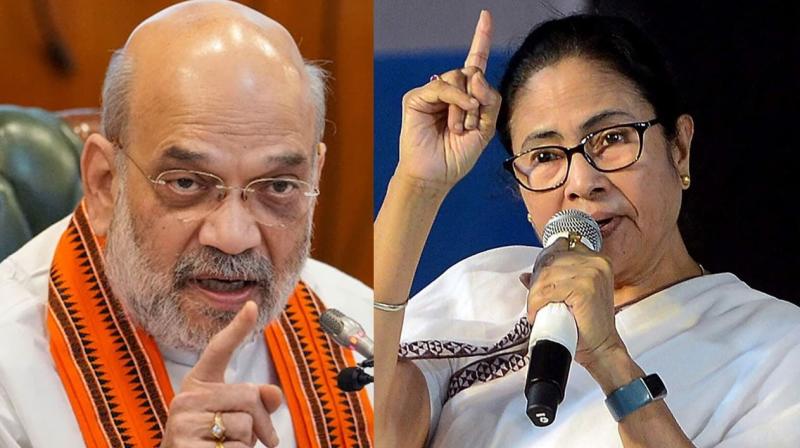

 Kolkata: The West Bengal Assembly elections are nearing. The elections will be held in two phases on April 23 and 29, with vote counting taking place on May 4. The primary contest in this assembly election is between the ruling Trinamool Congress (TMC) and the Bharatiya Janata Party (BJP). This intense competition has marginalized other parties in the state. The BJP, founded in 1980, is a major political party in India. The Bharatiya Jana Sangh was founded in 1951 by former Union Minister and freedom fighter Shyama Prasad Mukherjee. The BJP’s political ups and downs in West Bengal are a fascinating story.
In the 2019 Lok Sabha elections, the BJP won 18 of the state’s 42 seats. However, despite creating a strong momentum in the 2021 assembly elections, the BJP lost to the Trinamool Congress (TMC). This has changed the political landscape of the state, and the BJP has faced several setbacks. While the party performed poorly in the 2024 Lok Sabha elections, the ruling party also captured all four seats in the recent assembly by-elections.
Hindu consolidation is considered a key aspect of the BJP’s social engineering strategy. Muslims constitute approximately 30% of the population in West Bengal. The BJP had hoped to benefit from Hindu consolidation and Muslim votes, but there was no significant division of votes in Central and South Bengal. Here, Muslims supported the TMC. The BJP’s political gains in 2019 were largely driven by the support of Dalit groups such as the Matua-Namasudra, Rajbanshi, and Jangalmahal tribal groups. The 2024 results were not entirely disappointing for the BJP. The BJP, which has never been in power in West Bengal, is gearing up for the upcoming assembly elections. It will be interesting to see whether the BJP’s strategy will be successful in the state.
In the 1977 elections, the Jana Sangh, as a constituent of the Janata Party, won 29 assembly seats. Thus, Haripada Bharati became the first president of the Bengal unit. The BJP then contested its first assembly elections in 1982. In the 1984 Lok Sabha elections, the party contested nine seats and secured 0.4% of the vote. In the 1991 assembly elections, the BJP contested 291 seats, increasing its vote share from 0.51% to 11.34%. In the 1998 Lok Sabha elections, the BJP won a Lok Sabha seat on its own, its first victory in the state. In the 2014, 2019, and 2024 elections, the party established itself as the main challenger to the ruling party in the state.