
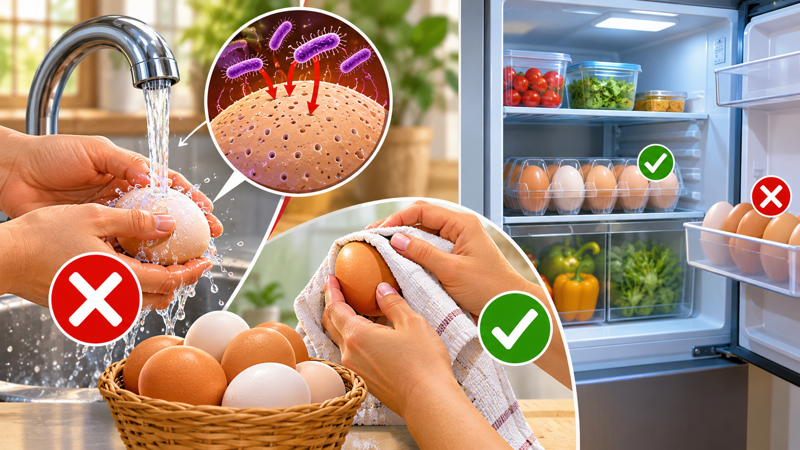
 Do you wash your eggs before storing them in the refrigerator? If so, you may want to reconsider this habit, as improper washing can increase the risk of bacterial contamination.
Many of us tend to wash store-bought eggs under running water before putting them in the refrigerator. However, food safety experts generally advise against washing commercially packaged eggs at home, particularly in countries such as the United States, where eggs are already washed and sanitized before being sold.
Eggshells naturally have a thin protective coating called the cuticle, or bloom. This layer helps prevent bacteria and other microorganisms from entering the egg through tiny pores in the shell. Washing untreated eggs can damage or remove this protective coating, potentially increasing the risk of contamination if the eggs are not handled properly.
Improper washing may also allow harmful bacteria, such as Salmonella, to enter through the shell, particularly when contaminated water is used or washing conditions are unsuitable.
Proper handling and storage are essential for keeping eggs fresh and reducing the risk of foodborne illness.
If you purchase commercially washed eggs, there is no need to wash them again. For unwashed farm-fresh eggs, avoid washing them before storage unless necessary. If an egg is visibly dirty, follow appropriate food safety guidance rather than simply washing it under running water.
Eggs with cracked shells should not be used if their safety is uncertain, as cracks can allow harmful bacteria to enter.
When refrigerating eggs, always place them on the main shelves of the refrigerator rather than in the refrigerator door. The temperature inside the refrigerator door fluctuates whenever it is opened, which can affect the freshness and quality of the eggs.
It is also advisable to keep eggs in their original carton. This helps protect them from damage, prevents them from absorbing odors from other foods, and makes it easier to check their expiration or best-before date.
For optimal safety, refrigerated eggs should be stored at 40°F (4°C) or below. Once eggs have been refrigerated, they should remain refrigerated until they are ready to be used.
Food safety begins with simple everyday habits. Avoiding unnecessary washing, storing eggs at the correct temperature, and handling them carefully can help reduce the risk of bacterial contamination and foodborne illness.
By following these basic precautions, we can protect our health and ensure that the food we eat is safe.
Stay informed, eat safely, and live healthily!