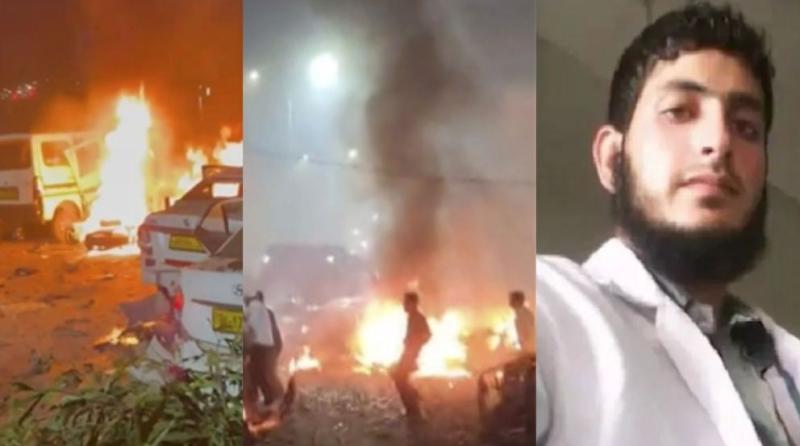
 New Delhi. The investigation into the November 10, 2025, car bomb blast near Delhi’s Red Fort has revealed a startling rift within the Jaish-e-Mohammed terrorist module over ideology, attack strategy, and funding. The differences between suicide bomber Dr. Umar Un Nabi and other members were so profound that Umar even refused to attend his associate Adeel Rather’s wedding in October.
According to investigating agencies, the arrested accused, Muzammil Ganai, Adeel Rather, and Mufti Irfan Wagay, were influenced by al-Qaeda’s ideology, which prioritizes attacks on Western countries and distant enemies. Dr. Umar Un Nabi, on the other hand, was inclined toward the radical ideology of ISIS. He believed that the immediate enemy (India) should be targeted first, and establishing a caliphate was the ultimate goal.
Umar considered himself the successor to the legacy of notorious Kashmiri terrorists Burhan Wani and Zakir Musa. This ideological conflict posed the greatest threat to the module’s unity. Most of the group’s members (except Wagay) initially wanted to go to Afghanistan for training, but failed. Subsequently, they decided to launch a major attack in India. Dr. Umar had been conducting extensive research on IED-making techniques online since 2023 and experimenting with chemicals in a rented house in Faridabad. There was also a heated argument over the module’s funding.
Umar was accused of misappropriation of funds. Investigations revealed that the main financial support came from Shaheen Shahid Ansari, a student at Al Falah University and a classmate of Muzammil Ganai. Shaheen allegedly raised approximately 2 million rupees through organized crowdfunding. She was associated with Jaish’s female recruitment wing, Jamaat-ul-Mominat, and played a key role in raising funds and resources for the Faridabad operation.
Following the arrest of Mufti Irfan Wagay in October, Umar met with other members in Qazigund, Kashmir, on October 18th. In this meeting, he tried to convince his associates of his ISIS-inspired strategy and reportedly succeeded. Exactly three weeks later, the Delhi blast occurred. Wagay’s arrest gave the police access to the entire module.
2,900 kilograms of explosive material was recovered from Faridabad, including high-yield explosives, chemicals, electronic circuits, remote controls, and ignition devices. Both Umar and Ganai had keys to the room where this material was hidden. This case demonstrates that no matter how organized terrorist organizations appear, ideological and personal differences within them weaken them. Yet, these differences do not prevent them from taking the lives of civilians.