
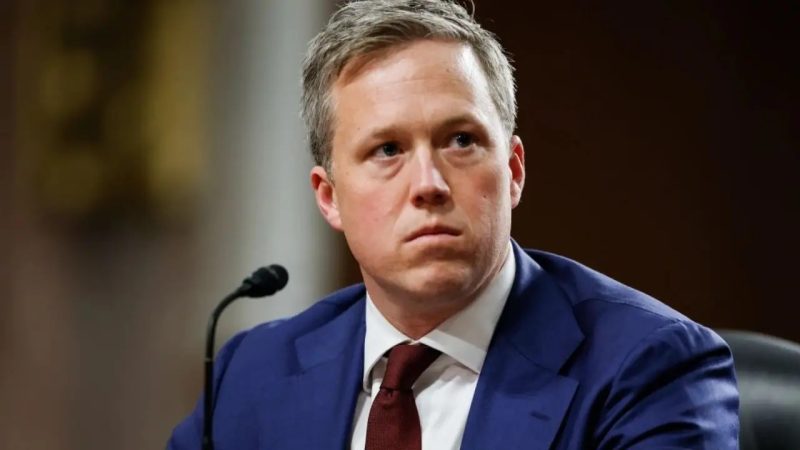
 Washington: Amid ongoing internal strife within the US Department of Defense and the military, Army Secretary Dan Driscoll has resigned from his post. The White House confirmed the decision on Monday, coming after nearly 18 months at the helm. Long-standing ideological and policy differences with Defense Secretary Pete Hegseth are believed to be the primary reasons for this significant resignation.
According to a senior military official, Driscoll had a detailed discussion with President Donald Trump about the current state of the US military and security strategy just before submitting his resignation.
Although the White House has not officially disclosed the specific reasons behind his resignation, spokeswoman Anna Kelly praised Driscoll’s tenure, saying he played a leading role in strengthening US military capabilities and negotiating an end to the Russia-Ukraine conflict.
This is the third major exit from the military’s top leadership during the Trump administration. Defense Secretary Hegseth previously relieved the Army’s top general, Randy George, in April.
Shortly thereafter, in June, General Christopher Donahue, commander of the Europe and Africa region, also abruptly resigned. Driscoll was considered a close ally of Randy George and had openly expressed disappointment at George’s removal.
A major reason behind the resignation is the shift in defense priorities. During Driscoll’s tenure, US troops stationed in Europe were given the specific responsibility of developing advanced drone technology. Driscoll himself has been a strong supporter of tech investment and modern defense technology. However, recently, the Department of Defense abruptly halted this drone modernization program and directed the relevant units to reconvert to conventional infantry. This policy shift was completely contrary to Driscoll’s vision.
Dan Driscoll is an Iraq War veteran, a successful tech investor, and a longtime associate of Vice President J.D. Vance. Vance and Driscoll have been friends since their days at Yale Law School. When President Trump nominated him for the position in 2024, he described him as a visionary and a leader capable of institutional change. During his tenure, he played a key role in easing stringent regulations on military technology contractors and exploring diplomatic paths between Russia and Ukraine. His departure has once again placed the balance of power and policy between the Pentagon and the military at a precarious juncture.