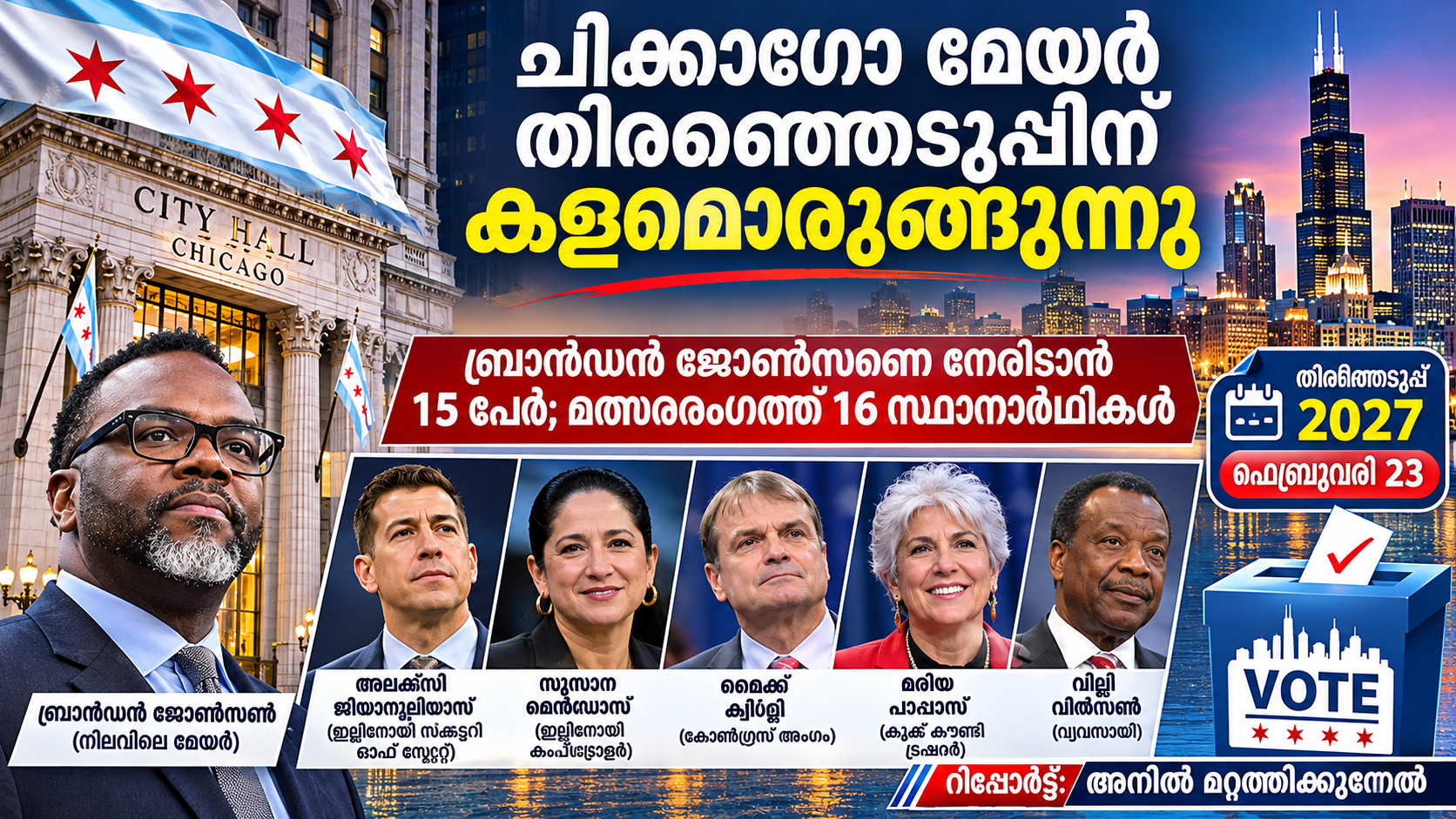
Chicago: The political contest for the next mayor of Chicago, the third-largest city in the United States, is heating up. A total of 16 candidates, including the incumbent Mayor Brandon Johnson, have submitted nomination papers to contest the mayoral election scheduled for February 23, 2027. With 15 contenders running against Johnson, this race is shaping up to be one of the most closely watched mayoral elections in recent Chicago history. The deadline for submission of nomination papers was October 26.
Prominent candidates in the fray include Illinois Secretary of State Alexi Giannoulias, Illinois Comptroller Susana Mendoza, U.S. Congressman Mike Quigley, Cook County Treasurer Maria Pappas, and businessman Willie Wilson. Mayor Johnson is seeking his second term in office.
During Johnson’s tenure, which began in 2023, issues such as public safety, the city's financial crisis, taxation policies, education, and immigrant-related challenges spurred extensive political debate. Johnson’s campaign has emphasized protecting the interests of the working class.
Alexi Giannoulias, with experience in state-level politics, is also regarded as a strong contender, focusing on city governance efficiency and economic development. Susana Mendoza, with her background managing state finances, is a notable candidate advocating for reforms in the city’s financial management and public services. Congressman Mike Quigley’s candidacy has drawn national attention to the election. Other well-known candidates familiar with city politics include Cook County Treasurer Maria Pappas and businessman Willie Wilson.
However, it is not yet certain that all 16 individuals who submitted nomination papers will appear on the final ballot. Candidates must gather at least 12,500 valid voter signatures to qualify. Challenges to the validity of submitted signatures could reduce the number of confirmed candidates. Election authorities plan to certify the final list of candidates by December 17.
Chicago’s mayoral election is officially nonpartisan, meaning party affiliations such as Democratic or Republican will not appear alongside candidates’ names on the ballot. If any candidate receives more than 50 percent of the vote on February 23, they will win outright. If no candidate achieves a majority, the top two vote-getters will advance to a runoff election scheduled for April 6.
Key issues expected to dominate the campaign include the rising cost of living, property taxes, crime rates, police services, public transportation, school education, and the city’s economic future. Following the U.S. midterm elections, Chicago’s mayoral race is receiving close scrutiny from national political leaders.
Ultimately, the election will determine whether Chicago voters choose continuity or change in leadership amid the city’s evolving challenges.
n
Original Malayalam report: Malayalam Daily News