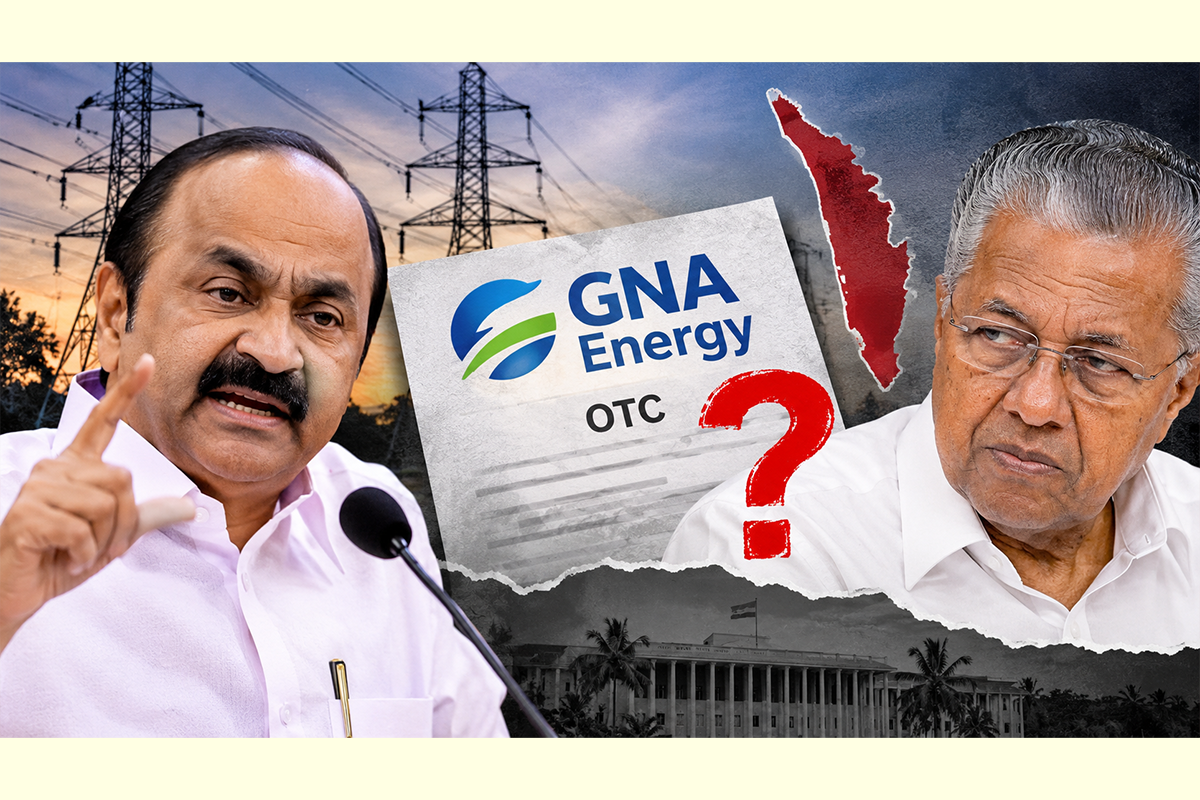
Thiruvananthapuram: A fresh controversy has erupted against the state government following revelations that Chief Secretary Bishwanath Sinha took a decisive role in initiating a contract with private company GNA Energy Private Limited to address the state’s power crisis. During the ongoing procurement process for electricity from Himachal Pradesh, the Chief Secretary reportedly directed in an official file that Haryana-based GNA Energy be considered as an alternative. The private company was introduced on the grounds of offering electricity at a lower rate.
However, then Kerala State Electricity Board (KSEB) Chairman M.G. Rajamanikyam had issued a warning that the proposed contract would impose an additional financial burden of approximately Rs 903 crore on the board. It is alleged that the Chief Secretary sought to proceed with the contract despite these warnings and related technical concerns.
Reports suggest that influential interventions favoring the contract were made from Chief Minister V.D. Satishan’s office, including exerting pressure on KSEB. Efforts to finalize the agreement reportedly continued up to the time just before Rajamanikyam was removed from the KSEB Chairman post, adding fuel to the controversy. Questions are being raised over the government’s rationale for advancing a proposal that may run counter to the financial interests of the electricity board.
Initially, Electricity Minister Sunny Joseph and KSEB had examined the possibility of purchasing electricity units from Himachal Pradesh at Rs 14.50 per unit to mitigate the oncoming power shortage. This step aimed both to ensure supply and to facilitate smooth distribution during emergencies. Subsequently, the government explained that concerns about the high financial liability of procuring from Himachal Pradesh prompted exploring alternative options. In this context, the Chief Secretary advanced the proposal to acquire electricity at a lower cost through GNA Energy Private Limited.
Comparing the Himachal contract with the GNA proposal, the government argued that dealing through GNA could yield a profit of around Rs 2,232 crore. This figure formed the basis for considering the private company’s proposal and reportedly received the Chief Minister’s approval. However, the significant discrepancy between the government’s expected profit and the KSEB’s warning about additional liabilities has raised serious questions about the economic viability of the contract. Calls for clarity on electricity rates, contract duration, associated costs, and future financial obligations have intensified.
M.G. Rajamanikyam had reportedly voiced strong opposition to entering into the contract with GNA Energy, warning that executing it could saddle the board with Rs 903 crore in additional financial liabilities. Emphasizing KSEB’s current financial condition and anticipated future electricity demand, the board adopted a position against decisions leading to such long-term liabilities. Despite these concerns, it is alleged that senior officials sought to push the contract forward. The timing of Rajamanikyam’s removal as chairman in connection with the contract dispute has also sparked suspicions, though no direct evidence has emerged to link the two conclusively.
Furthermore, allegations surfaced that Electricity Minister Sunny Joseph was not adequately informed about the contract proceedings with GNA Energy. This has led to accusations that the Chief Minister’s office and the Chief Secretary assumed key decisions after sidelining the minister responsible for the power department. The minister had repeatedly highlighted that GNA Energy is a private power trading platform and that entering into an agreement with such an entity requires thorough legal, technical, and financial scrutiny, especially for a public sector unit like KSEB.
His responses underscored demands for transparency in the contract process and the decision-making system, and questioned the extent of the minister’s involvement in crucial power sector decisions. The controversy has also centered on the role played by the department minister in such an important matter.
The opposition has called for the release of all documents related to the specific contract with GNA Energy given the severity of the issues. This includes the Chief Secretary’s file notes, KSEB’s financial warnings, government cost-benefit analyses, and other official communications related to the contract. One key question is how the government arrived at the Rs 2,232 crore profit estimate despite KSEB’s clear warning about Rs 903 crore in additional liabilities. Critics argue that without explaining the bases for these figures and the contract details, the controversy cannot be laid to rest.
There have also been demands for an independent inquiry into allegations of pressure on KSEB to sign the contract and the suspicions surrounding the chairman’s removal. As political and administrative controversies escalated, the government ultimately decided to withdraw from the contract process with GNA Energy. This decision was reportedly based on a new technical assessment by KSEB, which concluded that the state currently does not require additional electricity purchases.
The government clarified that it has not signed any contract with GNA Energy so far, and has only been examining the proposal. By affirming that the contract was neither finalized nor implemented, the administration is working to counteract criticism.
Although the GNA Energy contract move has been abandoned, lingering questions remain regarding the decision-making and official interventions that led to the initiative. The key issue is the Chief Secretary’s interest in advancing the private company’s proposal despite the KSEB’s opposition. Clarifications are needed on the financial liabilities warned by KSEB, the government’s profit estimates, the Power Minister’s objections, and the chairman’s removal.
Full disclosure of all contract-related records is essential for a complete evaluation of the context behind the decisions taken. Even though the government stepped back before signing, the approach it took toward safeguarding the public sector utility’s financial interests and ensuring administrative transparency is now being scrutinized. Any additional revelations relating to the Chief Secretary’s file interventions and KSEB warnings will likely keep the power contract dispute at the forefront of state political discussions in the days ahead.
n
Original Malayalam report: Malayalam Daily News