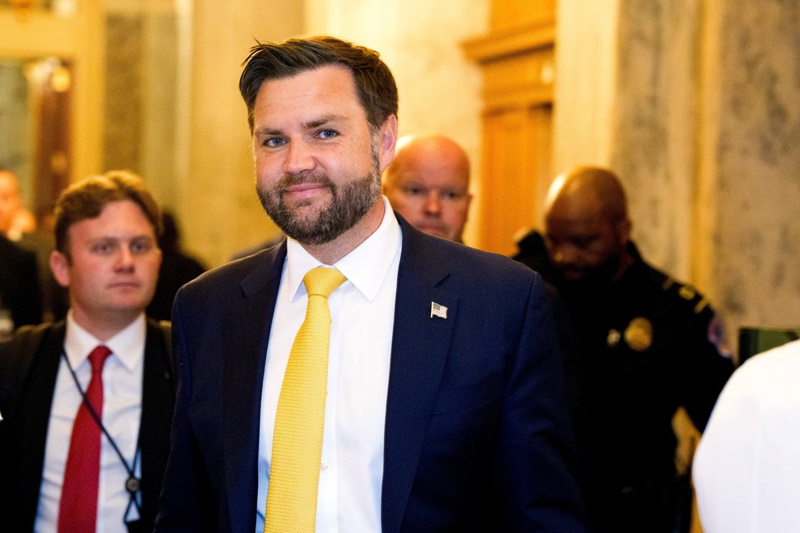
Washington: In the aftermath of the Republican Party’s severe setback in the U.S. midterm elections, Vice President J.D. Vance is reassessing his plans to run for the presidency in 2028. Reports indicate that Vance's future political decisions are being influenced by the party's disappointing performance in the November 3 election, the political crisis triggered by the ongoing war with Iran, and widespread public dissatisfaction with the Trump administration.
Considered one of the strongest Republican contenders for the 2028 presidential race, Vance is currently deeply deliberating whether to enter the race or postpone his presidential ambitions. However, he has not yet made a final decision regarding his candidacy. This assessment comes from CNN, citing conversations with around a dozen advisers and close associates familiar with Vance’s political outlook.
According to the report, Vance is weighing multiple factors, including his personal presidential aspirations, the current state of the Republican Party, the future of Trump’s MAGA movement, and family responsibilities. He acknowledges the need to reorganize the political coalition that secured Donald Trump’s victory in the 2024 presidential election, but sources close to him say he remains uncertain if he will be the one to lead that alliance in 2028.
A close associate of Vance noted that the 42-year-old politician still has ample opportunities to launch a future presidential campaign and sees no need to rush his decision amid today’s political climate.
One significant factor dampening Vance’s prospects is the war with Iran. Prolonged conflict and rising public opposition have reportedly eroded the Trump administration’s popularity, according to Republican political circles. Vance’s supporters believe that whether President Trump can swiftly end the war and restore public confidence will be crucial to Vance’s political future.
A close supporter expressed the view that, so long as the Iran conflict continues, it will be challenging not only for Vance but for any Republican candidate to secure victory in the presidential race. Additionally, there is growing concern within the party that failure to end the war could exact a heavy political toll in the 2028 election.
Following the midterm election losses, Vance’s detailed post on the social media platform X has been widely discussed in political circles. In it, he implied that the Iran war was a primary factor behind the Republican Party’s setbacks. Some of his followers interpret this response as indicative of the political stance Vance might adopt if he becomes a presidential candidate. However, CNN reports that Trump was reportedly unsettled by Vance’s linking of the war to the party’s electoral defeat.
Vance’s decision-making is also influenced by changes in his personal life. With the expected birth of his fourth child this summer, he reportedly desires to spend more time with his family. He is also weighing the intense pressure that a presidential campaign—a strenuous political battle lasting several years—would place on his family life and personal responsibilities.
Despite these considerations, some of Vance's staunchest supporters argue that abandoning a presidential bid solely for family or current political crisis reasons would not be the right move. They highlight that with still two years remaining before the next presidential election, political conditions and the administration's public standing could shift significantly.
Terry Schilling, president of the American Principles Project—an influential social conservative group within the Republican Party—is in favor of Vance running for president. Schilling stated that foregoing the 2028 opportunity due to short-term political setbacks would be a major error. He believes Vance is prepared to lead the Republican Party’s future political struggles and to represent the party's ideological principles robustly. Schilling added that he would be surprised if Vance ultimately decided not to run.
Several prominent Republican leaders have already begun political activity aimed at the 2028 presidential race. Notably, Florida Governor Ron DeSantis, Texas Senator Ted Cruz, and Georgia Governor Brian Kemp are frequently discussed as leading potential candidates.
Should Vance withdraw from the race, competition for the Republican presidential nomination is expected to intensify. Nonetheless, his supporters point out that a crowded field should not necessarily be seen as a setback for Vance. They refer to the 2016 and 2024 Republican primaries, where competitive conditions ultimately worked in favor of Trump.
Vance also enjoys important political backing through his close association with Stephen Miller, who was recently promoted to White House Chief of Staff. Miller, a longtime Trump loyalist and a key proponent of the administration’s hardline policies, maintains close political ties with Vance. Both men reportedly agree on the importance of focusing government efforts on implementing key promises that secured Trump’s 2024 electoral support.
Both Vance and Miller recognize that ending the Iran war and rebuilding public trust on economic and political issues are vital to the Republican Party’s future. The midterm election results from November 3 suggest significant shifts are occurring within the Republican Party’s political base.
The scale of the party’s losses reportedly shocked senior White House officials and Republican political advisers. Particularly worrisome is the decline in support from several voter groups that were critical to Trump’s 2024 victory. Election surveys cited by CNN show decreased backing for Trump among male voters, young people, Latino communities, and white voters without college degrees. White House officials and political strategists acknowledge that regaining these groups’ support will not be easy.
Addressing voter dissatisfaction—especially concerning the Iran war, government policies, and economic anxieties—remains a major challenge for the party. However, some leaders remain hopeful that public discontent with the Democratic Party and frustration with the political system may create an opening for the Republicans’ return.
As discussions about the Republican Party’s future leadership intensify, uncertainties about Vance’s presidential ambitions have come to the fore. Once viewed as the most likely successor to Trump, Vance now confronts internal party competition, declining administration popularity, and international crises simultaneously.
The trajectory of the Iran war, the Trump administration’s performance over the coming two years, the Republican Party’s political resurgence, and family considerations are all expected to play decisive roles in Vance’s final decision. Meanwhile, he has not entirely ruled out a 2028 presidential run, nor has he set a timeline for declaring his candidacy or withdrawing.
Vance’s upcoming political moves will be pivotal in answering who will lead the post-Trump Republican Party. His main question remains whether to enter the presidential race now or wait for a more favorable political environment.
n
Original Malayalam report: Malayalam Daily News