
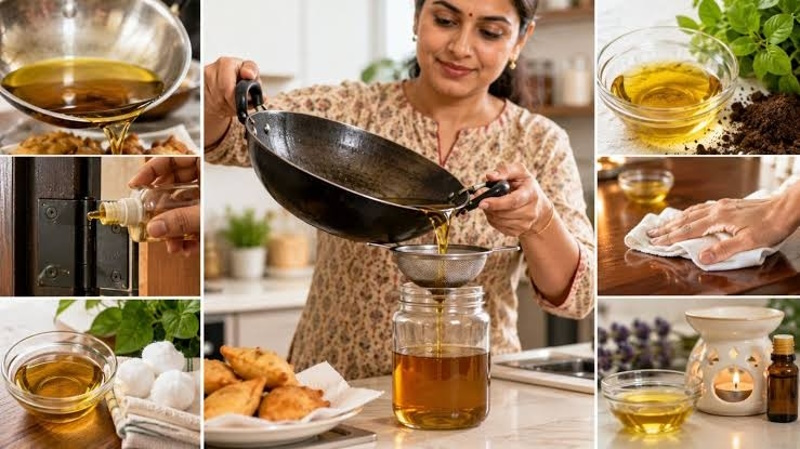
 Indian homes frequently prepare delicious fried dishes like puris, kachoris, pakoras, and samosas. The deep-frying process often leaves a large amount of used oil in the pan. This creates a dilemma for homemakers; many, fearing for their health, simply throw away the leftover oil, resulting in financial losses, while others continue cooking in the same oil without cleaning it. According to health and culinary experts, both of these practices are completely wrong.
Caution: Reheating oil with burnt particles can harm your health and taste.
In fact, when we fry puris or kachoris in oil, fine flour particles, dry spices, and some burnt bits of food settle to the bottom. If the same oil is reheated without filtering these impurities, these particles burn completely. This not only makes the subsequent food taste bitter and unpleasant, but also rapidly degrades the quality of the oil.
On the other hand, opening a brand new can of oil every time you fry can can be a budget-busting exercise. Kitchen experts believe that if the oil has been used only once and hasn’t burned or darkened significantly, it can be scientifically recycled and reused in limited quantities.
5 surefire steps to make leftover oil safe for reuse
1. Allow the oil to cool completely
Never rush to strain the boiling hot oil immediately after frying the puris. First, turn off the heat and allow the oil to cool to room temperature. Touching or stirring boiling oil can be extremely dangerous. Furthermore, as the oil cools, the heavier flour particles floating in it will automatically settle to the bottom, making it much easier to clean.
2. Use a fine muslin cloth or a fine sieve
After the oil cools, use a fine-mesh iron or steel strainer to strain it. For absolute best results, place a clean cotton or muslin cloth over the strainer and strain the oil. The cloth traps even the smallest flour particles and burnt black bits. After straining, you will notice that the oil appears completely transparent, clean, and ready for reuse.
3. Check the color and smell of the oil before reusing it
Even after cleaning, it’s essential to check the oil’s purity. If the oil still emits a pungent, bitter, or burnt odor after filtering, discard it immediately. If the oil’s color has become much darker than normal, or even coal-black, it’s toxic. Such smoke-emitting, viscous oil can cause cancer and serious stomach problems, so don’t reuse it.
4. Store safely in an airtight and dry container
Always use a glass or good-quality steel jar to store this well-strained, clear oil. Ensure the container is completely dry and clean. Even a drop of moisture or water can spoil the oil. Seal the jar with an airtight lid and store it in a corner of your kitchen away from direct sunlight or moisture. Proper storage prevents oxidation and ensures long-term preservation.
Do this before using the remaining oil again
Take these 3 precautions when reusing leftover oil in the kitchen
Avoid deep frying: Don’t reuse this filtered oil for frying puris or pakoras. Use it only for light frying, baking parathas, or seasoning everyday dry vegetables.
Avoid reheating: Reuse leftover oil only once. Reheating the oil repeatedly increases trans fats and harmful free radicals.
Don’t mix old and new oil: Never mix old oil with a new, fresh oil can, as this will cause the new oil to lose its shelf life. Always reuse it judiciously and in limited quantities.
Courtesy: HealthWatch