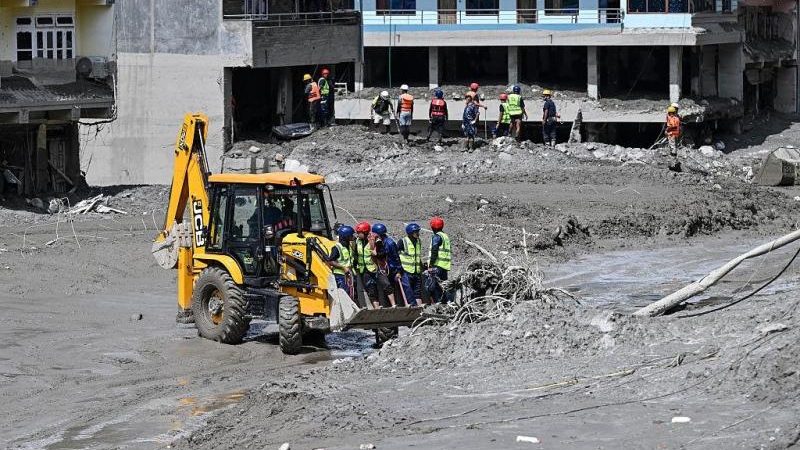
 Kathmandu: A catastrophic flood triggered by a glacier burst on August 26th in Nepal’s Bhotekoshi and Trishuli river valleys has caused widespread devastation. This devastating deluge has not only caused massive loss of life and property, but has also left a mountain of debris exceeding 2.2 million tons in the affected areas.
According to a preliminary report by the United Nations Development Programme (UNDP), about 22,000 large trucks will be needed to clear this huge debris and the operation could take several years.
According to figures released by the Nepal government, more than 1,000 people have died in the disaster, while nearly 4,000 are still missing. Relief and rescue teams have worked diligently to bring 10,451 people to safety.
The floods left behind 2.2 million tons of debris, estimated to be enough to completely fill 440 Olympic-sized swimming pools. The massive pile of debris is severely hampering relief operations.
Satellite data and a rapid assessment by UNDP revealed that the debris is not just mud, but also includes concrete from collapsed buildings, massive rocks, and uprooted trees. Approximately 550,000 tons of debris has been generated from the 2,359 destroyed houses alone.
Due to damaged roads and inaccessible routes, it is proving extremely difficult to transport heavy machinery and labourers to the affected areas.
The tragedy has had the worst impact on disaster-prone areas, directly affecting approximately 84,270 people in 17 municipalities across six districts. 67.4% of the affected areas depend on agriculture, and the food crisis has been exacerbated by the flooding of crops and livestock during the monsoon season.
Furthermore, the power infrastructure has also suffered a severe blow:
- Operating plants: 11 hydro power and 1 solar plant with a capacity of 431.1 MW are out of service.
- Under-construction projects: 15 other hydropower projects with a total capacity of 470 MW have been severely damaged.
Kyoko Yokosuka, UNDP Resident Representative in Nepal, described it as a tragedy for the residents of the Trishuli Corridor and said the first priority is to provide immediate assistance to the most affected so that they can get their lives back on track.