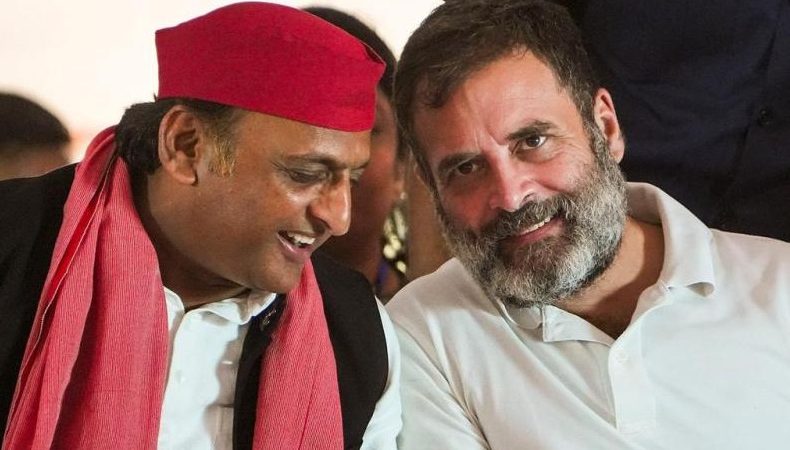
 Lucknow: With the 2027 Uttar Pradesh Assembly elections approaching, discussions over seat-sharing between the Samajwadi Party (SP) and Congress have gathered momentum. However, differences over the number of constituencies each party should contest have yet to be resolved.
Recent reports indicate that Congress is seeking a substantially larger share of seats, while the SP is emphasizing constituency-level strength, candidate viability and electoral calculations in determining the final allocation. Reports differ on the numbers under consideration: some suggest Congress could be offered around 60–70 seats, while other reports indicate the SP may seek to restrict its ally to roughly 45–50 constituencies.
Congress is reportedly seeking more than 100 seats, with some reports putting its demand at around 105 to 120. The party is drawing on the 2017 Assembly election arrangement, when it contested more than 100 constituencies as part of its alliance with the SP.
The SP, meanwhile, is reported to favour a seat-sharing formula based not simply on numbers but also on the relative strength of the parties in individual constituencies. Candidate strength, local organisation and the prospects of winning each seat are expected to play an important role in the negotiations.
Previous election results are also influencing the discussions. In the 2022 Uttar Pradesh Assembly election, the Samajwadi Party won 111 seats, according to Election Commission data. Congress won two seats in that election.
The two parties had previously contested the 2017 Assembly election together, with Congress receiving more than 100 constituencies. Congress is reportedly referring to that arrangement while seeking a larger allocation for 2027.
Political discussions have also involved regional parties such as the Suheldev Bharatiya Samaj Party (SBSP) and Nishad Party, both of which have been associated with the NDA. Reports of possible political realignments continue to circulate as parties prepare for the election.
For now, however, no final SP-Congress seat-sharing formula has been officially announced. Negotiations are continuing, and the eventual arrangement is expected to depend not only on the total number of seats allotted to each party but also on which specific constituencies they will contest.