Washington: The Democratic Party, poised to take control of the US Congress in January, is preparing legislative measures to impose stricter regulations on the development and use of artificial intelligence (AI) technology. The party has decided to prioritize issues including the security of AI systems, accountability of tech companies, the energy crisis fueled by the rapid expansion of data centers, and the financial burden on consumers. Reuters reported the developments, citing Democratic lawmakers, Congressional officials, and policy experts. This new initiative by the Democrats marks a significant shift from the Republican-led Congress’s approach, which has largely promoted AI growth while showing reluctance toward imposing operational restrictions.
Democratic leaders emphasize the need to address the social and economic repercussions of the uncontrolled proliferation of AI technologies more seriously. In particular, the rapid growth of large data centers supporting AI services has sparked protests across various US regions. Concerns are growing that the enormous electricity consumption required by these centers strains energy infrastructure and drives up electricity rates. There is also strong demand to prevent the financial burden of such infrastructure projects from being shifted onto ordinary consumers.
Against this backdrop, the Democrats plan to introduce new bills aimed at protecting consumers from increased electricity costs related to data center operations, subjecting advanced AI models to independent security audits, and clarifying the legal liabilities of tech companies for harms caused by their AI products. However, with Republican President Donald Trump remaining in the White House, enacting new AI regulatory laws will not be straightforward. Trump has repeatedly opposed mandatory federal regulations on the AI industry, arguing that such rules would undermine US global competitiveness by impeding technological development. On Friday, Trump stated he would collaborate with American states interested in leveraging AI technology but did not reveal details of these plans.
Meanwhile, gaining control over congressional committees will be a crucial political advantage for the Democrats. They will be able to use committee powers to introduce legislation, investigate tech companies’ operations, summon industry leaders for testimony under oath, and build political support for more rigorous controls if cases surface where AI systems harm public welfare. Greg Casar, Democratic representative from Texas and chair of the Congressional Progressive Caucus, has already called for top executives of leading AI firms to appear before congressional committees and testify under oath. He stresses the need for greater transparency regarding AI security and corporate accountability to the public.
If the Democrats’ proposed regulations are enacted, substantial changes are expected in how the US AI industry operates. Companies may face increased costs due to mandatory comprehensive security checks before the release of new AI models and requirements to modify existing systems to mitigate risks. Industry representatives worry that such regulations could delay new technology rollouts and affect profitability. Anticipation of tighter rules and doubts about recouping investments in AI infrastructure have contributed to selling pressure on tech stocks. On Thursday, US technology stocks experienced sharp declines, with European and Asian markets reflecting the downturn on Friday, although NASDAQ futures indicated a possible slight recovery ahead of Friday’s opening.
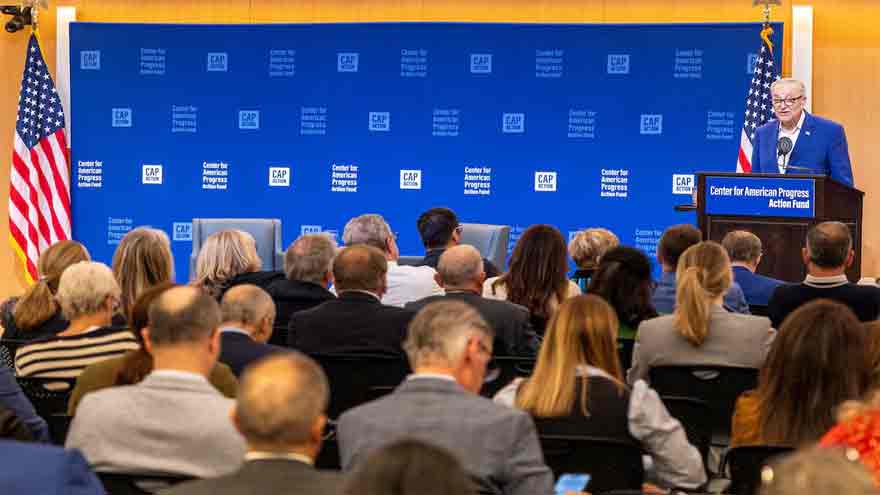
A key focus of Democrats will be protecting ordinary consumers from rising electricity expenses linked to the expansion of data centers. Senator Chuck Schumer of New York, expected to assume Senate majority leadership, stated at a Washington event that this issue will be among his top legislative priorities next year. Because training and operating AI systems require large amounts of electricity, the construction of new data centers is driving significant investments in the energy sector. However, Democrats insist that ordinary households and small businesses should not bear the costs of this infrastructure growth through increased electricity bills. Legislative proposals may examine electricity rate determination methods of utility companies and policies concerning the energy use of large data centers.
Massachusetts Democratic Representative Lori Trahan, actively engaged in AI regulatory policymaking, plans to advance legislation mandating independent security audits for leading AI models. According to information from Trahan’s deputy chief of staff, Francis Grubar, the bill would require independent experts to assess whether AI systems meet specified security standards. The goal is to ensure companies do not solely rely on their internal safety evaluations but also submit to external expert reviews. Trahan will also pursue legislation establishing clear legal liability for companies when AI systems cause harm to individuals, organizations, or society.
California Democratic Representative Zoe Lofgren, a candidate for chair of the House Science Committee, shares a similar position. She advocates regulations that promote technological innovation while ensuring responsible AI use. Lofgren emphasizes that Democrats seek a legal framework to mitigate the risks of technology without hindering its progress.
Michigan Senator-elect Abdul El-Sayed campaigned on establishing an independent federal regulatory agency to oversee the development and use of AI technology. He envisions a body empowered to monitor AI companies’ operations, enforce safety regulations, and take action against legal violations. Supporters argue that such an agency would facilitate better-coordinated oversight compared to the current situation, where multiple government agencies handle AI-related concerns in different areas.
Public concern about AI risks appears to be increasing. A poll published in October showed that most American voters believe the Trump administration and Congress are not taking AI’s dangers seriously enough. There is also broad support for the government to impose clear regulations on technological use. Political analysts expect this public sentiment to significantly influence forthcoming legislative discussions.
Ed Mills, head of policy research at Raymond James, noted that a major AI security breach or crisis could generate bipartisan backing for stronger regulations. Although passing legislation over a presidential veto requires a two-thirds majority in both congressional chambers, making Trump-opposed laws difficult without substantial Republican cooperation, Mills suggested Democrats might gradually incorporate AI regulatory provisions into essential budget and other major bills.
Using their new committee control, Democrats plan to intensify scrutiny of top US AI companies, focusing on security practices at organizations including OpenAI, Anthropic, Meta, Alphabet (Google’s parent company), and SpaceX. In October, Zoe Lofgren and other Democratic leaders across House committees requested detailed explanations from these companies about their security measures, incidents where AI systems operated contrary to designers’ intentions, and responses taken in such cases. Lawmakers argue that as AI systems become increasingly autonomous, their decisions must remain subject to human oversight.
Congressional examinations are also expected to assess the reliability of security information provided by companies, risks of technology misuse, and safeguards against harmful activities. While Republicans and Democrats agree on maintaining America’s global lead in AI technology, they differ considerably on the policies needed to achieve this. The Trump administration favors minimal regulation to encourage private investment and innovation, whereas Democrats stress the necessity of legal frameworks ensuring public safety, consumer protection, and corporate accountability alongside technological progress.
With Democrats controlling congressional committees, public hearings, investigations, and legislative debates on AI companies’ conduct are likely to increase. However, President Trump’s opposition and the absence of requisite political consensus will remain major hurdles. Balancing AI’s rapid advancement with public safety concerns stands as the primary challenge for US lawmakers.
Whether the new regulatory measures proposed by Democrats become law will determine the future conduct of the US AI industry and its influence on global technological competition.
n
Original Malayalam report: Malayalam Daily News