WASHINGTON: International efforts to resolve ongoing conflicts between the United States and Iran through diplomatic negotiations remain uncertain. U.S. Secretary of State Marco Rubio stated that the terms put forward by Iran regarding peace talks are unacceptable. He criticized Tehran's demands as impractical and contrary to U.S. security interests and existing diplomatic positions.
This strong U.S. response came amid ongoing mediation efforts by various countries to address differences between the two nations. Washington is willing to continue the talks but conveyed that it is not prepared to agree to a deal based on one-sided conditions, raising further doubts about the immediate prospects of reaching a peace agreement between the U.S. and Iran.
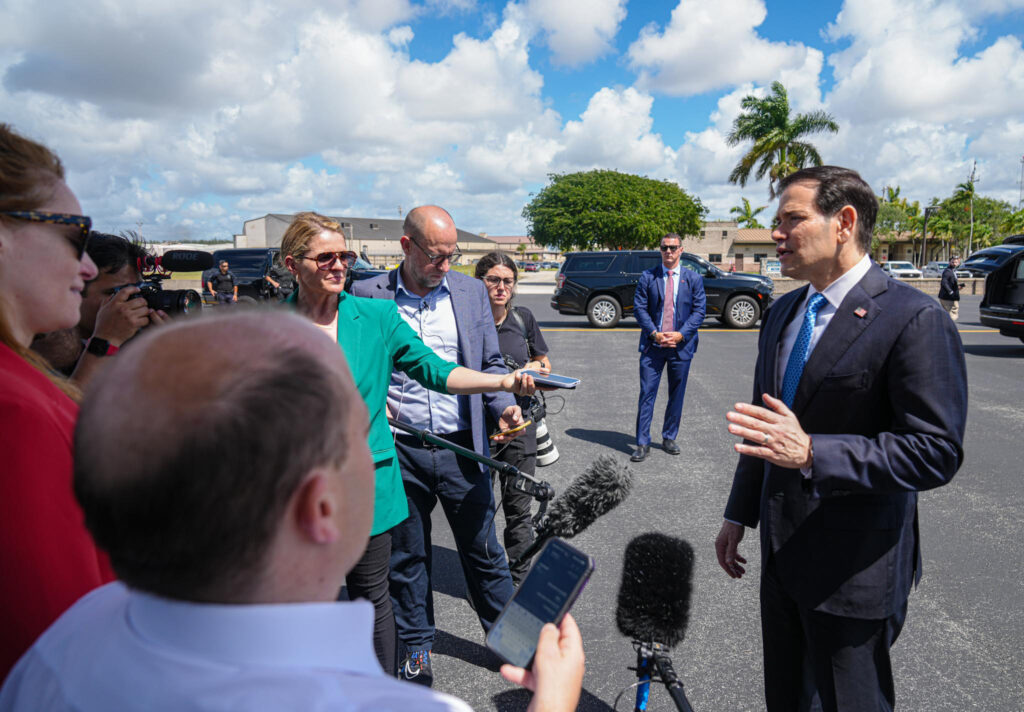
Rubio made these remarks while speaking to reporters at the Homestead Air Reserve Base in Florida, ahead of his departure to Paris to attend the G7 Foreign Ministers' meeting. He noted that many countries are engaging diplomatically to end the conflict between the U.S. and Iran, with intermediary states proposing new solutions acceptable to both sides.
However, the current assessment from the U.S. is that it is unrealistic to expect a peace accord soon given the present circumstances. Rubio emphasized the need for both parties to adopt a realistic approach if progress is to be made. He said certain conditions put forward by Iran cannot be accepted by the United States.
Washington maintains that for diplomatic talks to succeed, mutual trust and clear actions addressing security concerns are essential. Disagreements over Iran's nuclear program remain a major point of contention between the two nations.
Rubio highlighted that measures implemented by the administration under President Donald Trump are pivotal in preventing nuclear weapons proliferation and ensuring security in the Middle East. The U.S. has long held the position that Iran's nuclear activities must be subject to international monitoring and controls. Iran, on the other hand, asserts that its nuclear program is for peaceful purposes.
The lack of trust between the two governments over these issues presents a significant challenge to diplomatic efforts. Without mutual understanding on nuclear restrictions, economic sanctions, and regional security matters, a comprehensive agreement is unlikely.
In response, Iran has reacted strongly against the U.S. stance. Iranian Foreign Minister Abbas Araghchi stated that domestic political developments in the U.S., including the midterm elections, have impacted the progress of bilateral talks. Speaking from Tehran, he alleged that American political conditions are reflected in the diplomatic negotiations.
Araghchi called on the U.S. to make clear political decisions and undertake sincere engagement to resolve existing differences if peace efforts are to succeed. Tehran also demanded that Washington seriously consider the proposals Iran has put forward to end the conflict.
Iran warned that prolonged talks increase regional uncertainty. According to reports, the Iranian Foreign Minister issued a severe warning to the U.S., stating that if Washington rejects Tehran's peace proposals, it may face serious military repercussions. The reply sent the message that Iran will make no compromises concerning its security and sovereignty.
While diplomatic avenues for resolution remain open, rising military threats risk further complicating security in the Middle East. Escalation and hardening stances on both sides could undermine the efforts of mediating countries.
The conflict extends beyond just the U.S. and Iran. The crisis could impact political stability in the Middle East, international oil markets, maritime trade route security, and the global economic environment. In particular, deteriorating security in the Persian Gulf raises concerns over international energy supplies.
The positions taken by international powers, including the G7 nations, will be pivotal in upcoming discussions. The central question is whether consensus can be reached on Iran's nuclear program, economic sanctions, and regional security issues.
Meanwhile, the U.S. refusal to accept Iran’s demands and Tehran’s warnings about military consequences present new challenges to peace initiatives. Whether the conflict will be resolved through negotiations or progress toward more confrontational measures will depend on future diplomatic engagements.
n
Original Malayalam report: Malayalam Daily News