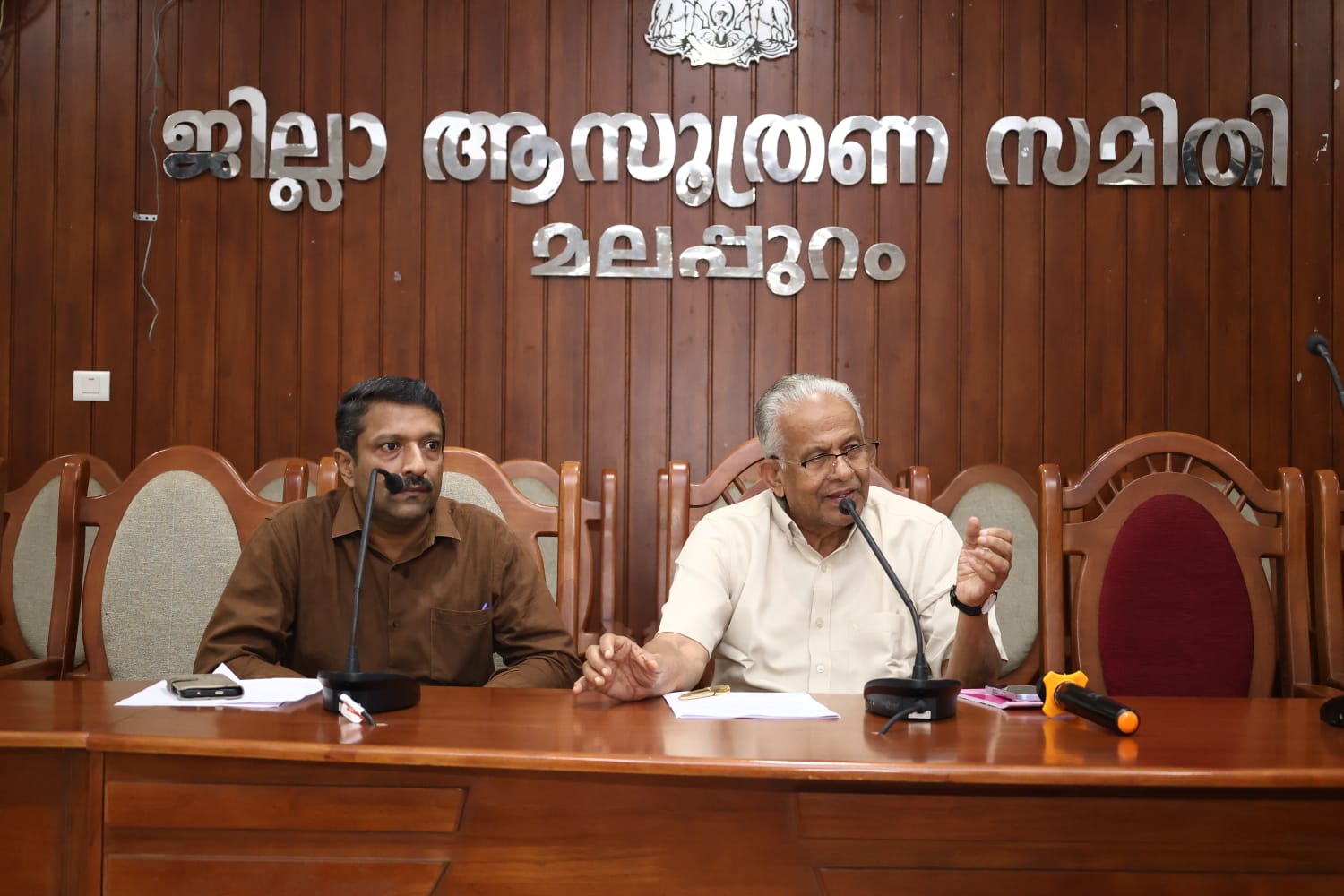
Malappuram: MP E.T. Mohammad Basheer has urged that the Union Government expedite and enhance the efficiency of the implementation of the VBG-RAM-G (Vikasit Bharat Guarantee for Rozgar and Jeevika Mission – Gramin) project. Emphasizing the need to increase employment opportunities in rural areas, he stressed the importance of utilizing the project’s potential to the fullest by prioritizing infrastructure development and the creation of long-term beneficial assets. He made these observations while speaking at a high-level review meeting organized at the Malappuram Planning Secretariat Hall to evaluate the current progress, implementation feasibility, future plans, and coordination among various departments.
He noted that earlier rural employment guarantee schemes primarily focused on ensuring employment and income for ordinary workers, whereas the VBG-RAM-G project places greater importance on generating permanent developmental assets and on construction activities in rural areas. The project should assist in assuring employment availability, facilitate the comprehensive development of villages, and improve the living standards of the people. For this, it is essential to identify local needs and design activities on a priority basis, he said.
Since numerous works under the project require technical expertise, the MP demanded special attention toward skill development of the workers. He emphasized the need to empower workers to transition from traditional work methods to those requiring greater technical proficiency. Necessary training programs should be organized, and opportunities created for workers to benefit from new employment possibilities. Enhancing workers’ capabilities will not only improve the quality of the project but also positively impact the rural employment sector, he added.
MP Basheer highlighted that the effective execution of the project necessitates coordination among various government departments, local self-government institutions, and technical wings. He assured full support for interventions at the central government level and for policy decisions when required. Priority should be given to measures that ensure the benefits of the project reach the deserving rural populations, he underlined.
The meeting also revealed that the initial list of 318 types of works included in the VBG-RAM-G project has been expanded to 375, after considering demands and suggestions from various states. This expansion provides scope for undertaking more works tailored to regional conditions and developmental needs.
The project activities are planned around four main sectors: water security, rural infrastructure development, strengthening livelihood opportunities, and disaster mitigation. Priority will be given to ensuring the conservation and efficient utilization of water resources; construction activities to enhance rural infrastructure; livelihood projects aimed at increasing income opportunities for the local populace; and preventive measures to reduce the impact of natural disasters.
The assessment concluded that identifying and implementing appropriate projects matching local developmental requirements can create additional employment in rural areas and promote the development of public assets. To achieve the project’s objectives, precise planning, timely execution, and continuous monitoring are necessary.
At the meeting, Accredited Engineer E.P. Sayyid Nisam from Tirurangadi taluk presented detailed information about the project, including the various activities incorporated, their technical aspects, and implementation feasibility. District-level officials, including Joint Programme Coordinator for the VBG-RAM-G project B. Sreebash, also attended the meeting. The review meeting focused on invigorating rural development efforts and ensuring effective utilization of project potentials at the district level.
n
Original Malayalam report: Malayalam Daily News