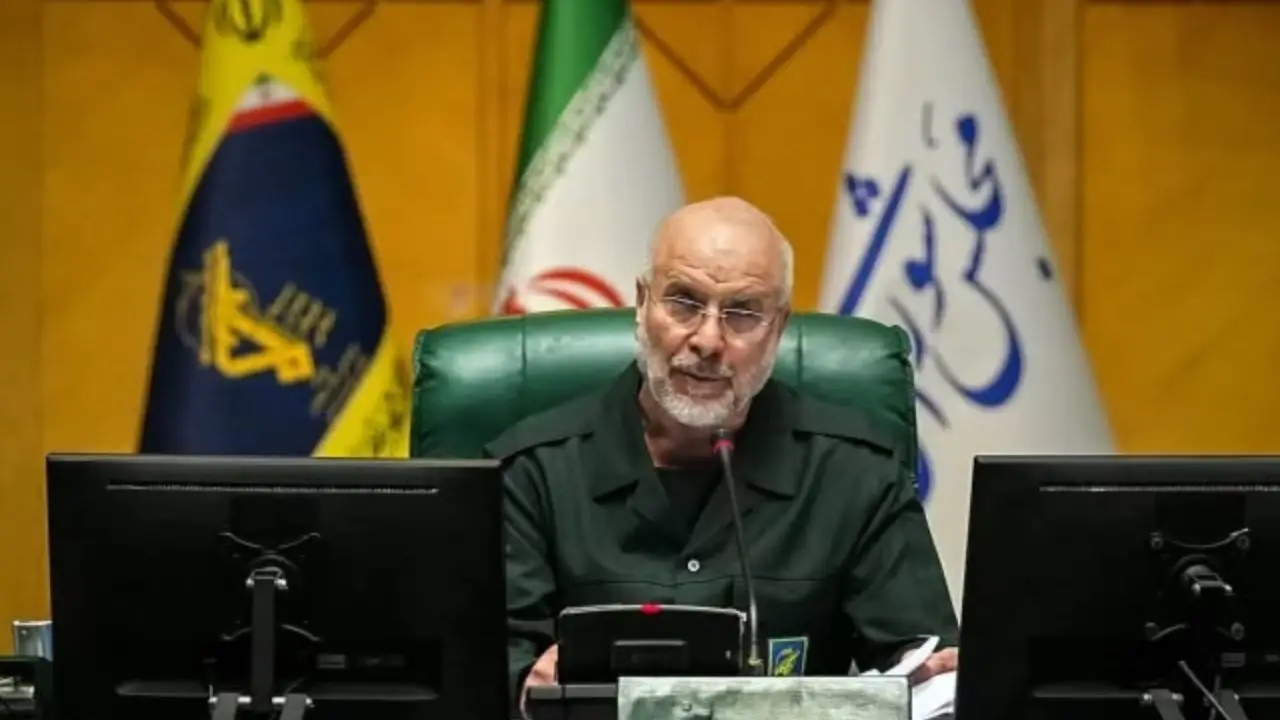
Tehran: As tensions escalate between Iran and the United States in West Asia, Iranian Parliament Speaker Mohammad Bagher Ghalibaf issued a strong warning to Washington. He stated that if the United States once again makes a mistaken military or political move, the nature and extent of the ensuing war, as well as the geographical boundaries of the battlefield, will be determined by Iran's armed forces. Ghalibaf emphasized that Iran is not willing to yield to American pressure and is prepared to take any necessary measures to protect the nation's sovereignty and national interests.
Addressing a virtual session of the Iranian Parliament on Sunday, Ghalibaf used strong language against the United States. He declared that Iran is equally prepared to engage in negotiations or confront military conflict with America. He dismissed the U.S. calculation that alternating between threats of war and promises of peace talks could pressure Iran, stating that such tactics will not succeed.
While Ghalibaf did not completely rule out the prospect of a new agreement with the United States, he stressed that Tehran's position is that any understanding must be based on seven reasonable conditions proposed by Iran. These conditions, he pointed out, are the result of the Iranian people's long struggles and sacrifices. There can be no concession on provisions that guarantee the country's security, sovereignty, and national interests.
Ghalibaf demanded Washington abandon the notion of bringing Iran to the negotiating table through threats or military pressure. His strongest warning was related to the ‘‘battlefield’’, where he asserted that if the United States makes another erroneous move, the scope and location of any resulting military confrontation will not be decided by Washington, but by Iran’s armed forces. He warned that Iran’s military capacity and strategic decisions would be decisive, and claimed the country has the ability to deliver a strong response to any military action against it.
He further cautioned that if a new war were to start, its repercussions would not be confined to Iran and America alone but could spread to other countries in West Asia. This statement is particularly significant given the serious security and political stability challenges in the region today.
In his address, Ghalibaf also referred to Iran’s unveiling of a new missile center, describing it as a sign of evolving strategic dynamics in the region. He highlighted the critical role of Iran’s Aerospace Force in strengthening the nation's defense capabilities and claimed that Iran’s missile systems possess the capability to challenge even Israel’s security calculations. However, he did not provide specific technical or operational details about the new missile center.
Ghalibaf sharply criticized recent remarks by U.S. Treasury Secretary Scott Bessant, accusing the American administration of exhibiting pessimism rather than confidence in its stance toward Iran. He argued that American efforts to change Iran’s position through economic sanctions and political pressure would fail. He stressed Iran’s resilience to foreign pressure and reaffirmed that there would be no compromise in protecting national interests.
Acknowledging the domestic economic difficulties facing Iran, Ghalibaf spoke about inflation, unemployment, and rising prices of daily necessities seriously affecting ordinary people's lives. He reminded that it is the government’s chief responsibility to safeguard the livelihoods of those enduring the long-term impacts of conflict and war conditions. He also criticized the prevalent practice in Iranian markets of charging different prices for the same product, saying that while inflation explains rising prices, having multiple prices for the same item is unjustifiable. This variability, he said, results not only from inflation but also from lapses in market monitoring and control. He urged relevant officials to take greater responsibility in controlling price hikes and preventing market distortions.
Ghalibaf’s severe statements emerge amid increasingly complicated relations between Iran and the United States. While maintaining the possibility of dialogue if America accepts Iran’s conditions, Iran simultaneously warns of military retaliation. He underscored that if new military actions occur, their consequences will not be confined within pre-established boundaries. In light of the existing security environment in West Asia, such remarks could raise fresh concerns, particularly given the ongoing tensions involving Iran, Israel, and the United States. Even a minor military clash could escalate into a broader crisis.
Summarizing his message, Ghalibaf stated: "If America wants negotiations, it must accept Iran’s conditions; if it chooses war, Iran is ready to determine its extent and the battlefield."
n
Original Malayalam report: Malayalam Daily News