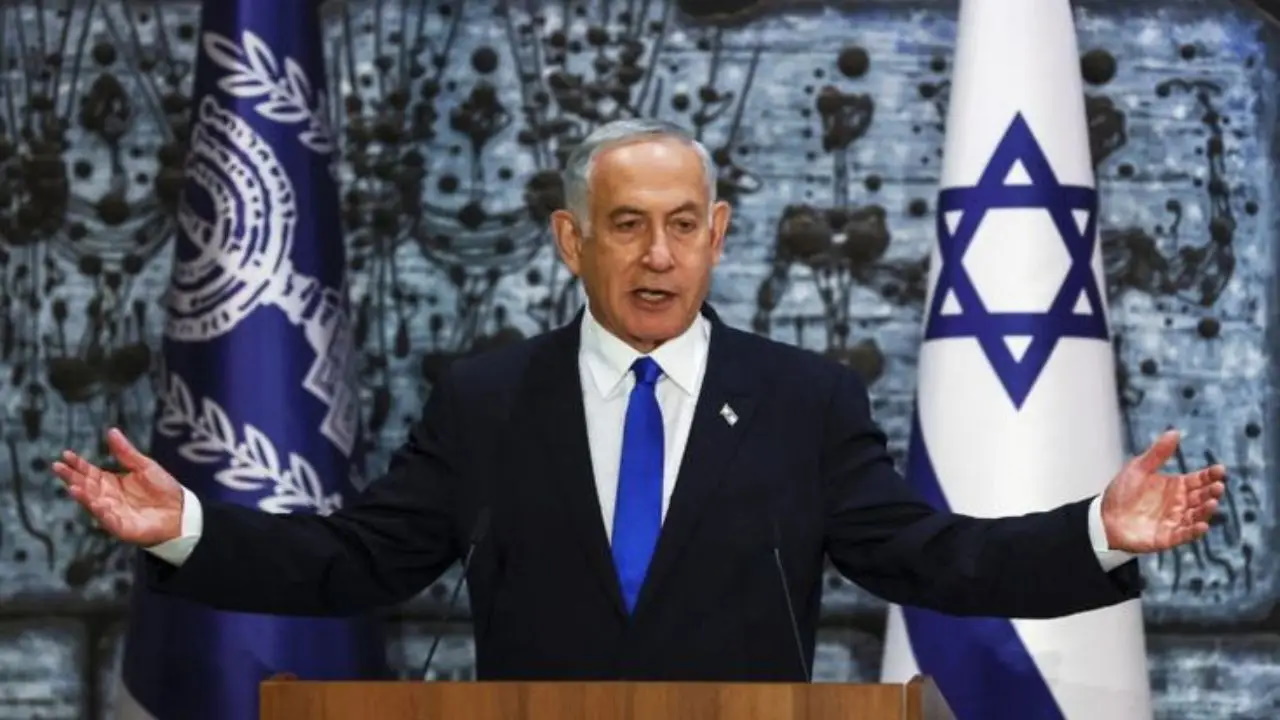
Jerusalem: Political moves are intensifying in Israel related to the formation of a new government. On Monday, Defence Prime Minister Benjamin Netanyahu stated that the most appropriate way to overcome the current challenges facing the country is to form a national unity government. He urged the formation of a broad unity government that includes all political parties recognizing Israel as the nation-state of the Jewish people. Netanyahu also said through social media that whichever government is formed, his Likud party would continue cooperation with the Haredi (ultra-Orthodox Jewish) coalition parties under his leadership. He further assured that, based on mutual understanding, the legal recognition of the status of those engaged in Torah study would be secured.
Netanyahu's remarks came following coalition talks held between representatives of the Likud party and Gadi Eisenkot’s Yashar party. However, reports indicate that no significant progress was made in those discussions. After being given the opportunity to form a government, Eisenkot is exploring potential alliances with the Haredi parties as well. Nevertheless, disputes over imposing mandatory military service on Haredi youths continue to be the main sticking point in the talks. The demand to exempt them from military service clashes with the position that the same law should apply to all groups equally, which remains an obstacle to forming a coalition.
No political bloc secured an outright majority in the Israeli parliamentary elections held on October 27. In the 120-member Knesset, the right-wing religious alliance led by Netanyahu won 53 seats, while the four-party coalition led by Eisenkot secured 48 seats. Arab-led parties won 19 seats. Based on political consultations held after the election, President Isaac Herzog last week assigned Eisenkot the task of forming the government. Eisenkot gained the support of 67 parliament members, including those from Arab-led parties, while Netanyahu secured backing from 46 members.
Eisenkot has been given a 28-day deadline to form a government, with the possibility of requesting an additional 14 days if needed. However, Eisenkot’s declaration that Arab-led parties would not be part of his government complicates the coalition possibilities further.
While Netanyahu advocates for a national unity government, Eisenkot continues discussions with various political factions aiming to secure majority support. The government formation’s future hinges on reaching consensus on critical issues, including military service for the Haredi groups. In the absence of a clear majority for any one bloc, the political negotiations and alliance formations in the coming days will be decisive in determining Israel's next government.
n
Original Malayalam report: Malayalam Daily News