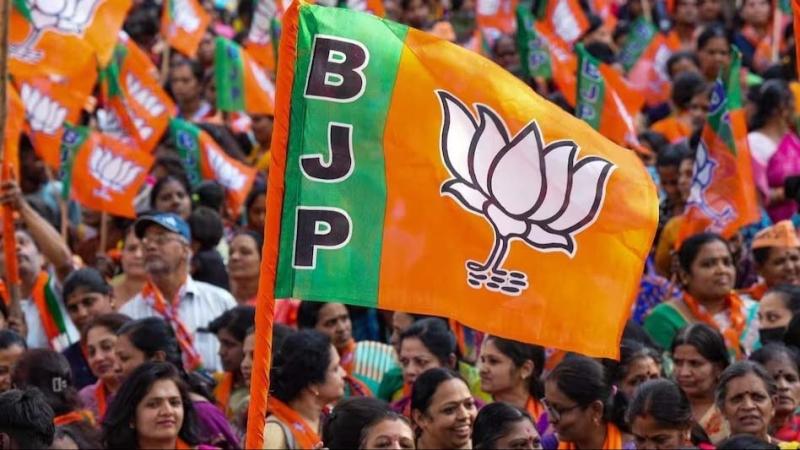
 Chandigarh: After a prolonged tussle, the revival of the alliance between the Shiromani Akali Dal (SAD) and the Bharatiya Janata Party (BJP) in Punjab, coupled with the active involvement of Waris Punjab De in the Majha region, has significantly altered the political equations ahead of the upcoming Assembly elections. Until a few months ago, the electoral battle was considered a direct contest between the ruling Aam Aadmi Party (AAP) and the main opposition Congress. However, these recent political developments have paved the way for a strong four-cornered contest. In this changed political scenario, all eyes are now on the renewed Akali Dal-BJP alliance and the growing political influence of Waris Punjab De.
An analysis of the upcoming Assembly elections against the backdrop of the previous Lok Sabha election results reveals some interesting figures. The Congress, which won seven seats, and the Aam Aadmi Party, which secured three seats, received almost equal vote shares of around 26 percent each. Meanwhile, the Akali Dal, which contested independently, won one seat and secured 13.42 percent of the votes, while the BJP, despite failing to win a single seat, secured 18.56 percent. Their combined vote share stood at approximately 32 percent. On the other hand, Amritpal Singh, who surprised everyone by winning the election as an independent candidate, has now entered the electoral fray with Waris Punjab De.
The combined strength of the BJP and the Akali Dal, which parted ways nearly six years ago, has historically had a significant impact on Punjab politics. The alliance, which began in 1996, has held power in Punjab three times. However, contesting elections separately left both parties considerably weakened in the previous Assembly and Lok Sabha elections.
In an effort to strengthen its foothold in Punjab politics, the BJP is now pursuing a strategy similar to the one it adopted in Bihar and Maharashtra. It is worth noting that in both states, the BJP initially contested elections as a junior alliance partner, joining hands with the Janata Dal (United) and the Shiv Sena, respectively. Over time, however, the party gradually expanded its organisational base, strengthened its electoral presence and eventually emerged as the dominant partner in these alliances.