 The growing number of police encounter killings in several BJP-ruled states has raised serious questions about the rule of law, human rights, and the functioning of India’s criminal justice system. The recurring similarities in police accounts of these incidents have also intensified concerns about whether suspects are being denied their constitutional right to a fair trial.
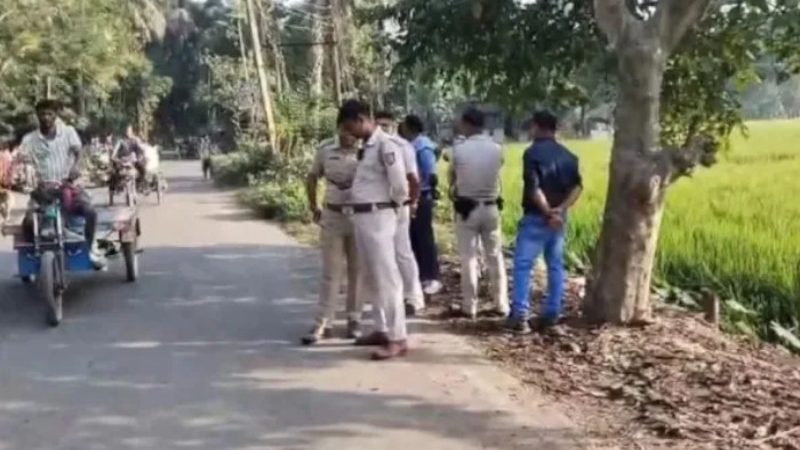
Reports of police encounter killings have emerged from West Bengal following the BJP’s reported assumption of power in May. In a recent incident, police shot dead Dilip Roy, an accused in the rape and murder of a 12-year-old girl in Uttar Dinajpur district. According to the police, a team reached Parapukur in Raiganj at approximately 2 a.m. after receiving information about Roy’s whereabouts. Police claimed that Roy opened fire on the team, prompting officers to retaliate in self-defence. He was killed in the exchange of gunfire.
The incident was reportedly the fourth such killing since May.
On July 8, Prabhas Mondal, accused of raping and murdering a 13-year-old girl, was killed in Baruipur in South 24 Parganas district. Police stated that Mondal was being taken for evidence collection at around 12:45 a.m. when he allegedly snatched a firearm from an officer, opened fire on the police team, and attempted to escape. Officers reportedly retaliated in self-defence. Mondal was declared dead after being taken to hospital.
A similar incident occurred on October 27 in Gaighata, North 24 Parganas, where Prahlad Das, accused of the rape and murder of a 13-year-old girl, was killed in an alleged police encounter. According to the police, Das was taken for evidence collection shortly after midnight when he allegedly seized an officer’s firearm and opened fire. Police claimed that he was killed in the subsequent exchange of gunfire.
On the same day, police also reported the killing of Samiul Sheikh, an accused in the murder of a BJP worker, during an encounter in Shamsherganj, Murshidabad district. The explanations provided by police in these incidents reveal a strikingly similar pattern. Three of the four encounters reportedly occurred late at night or during the early morning hours. The exception was the killing of Samiul Sheikh, which took place in broad daylight.
In several cases, the police claimed that suspects attempted to seize officers’ firearms, opened fire, and were subsequently killed when police retaliated in self-defence.
The repetition of these circumstances has raised questions about the credibility of the official accounts and whether the incidents were genuine armed confrontations or possible extrajudicial killings.
Although police maintain that their actions were necessary to protect officers’ lives, such claims require independent investigation and judicial scrutiny. An accused person’s alleged involvement in a serious crime does not eliminate their constitutional and legal protections.
Uttar Pradesh, governed by Chief Minister Yogi Adityanath, has also witnessed a substantial number of police encounters over the past nine years. According to figures reportedly released in May, the state recorded 17,043 police encounters during this period, resulting in the deaths of 289 people.
The reported fatalities were distributed across several police jurisdictions, including Kanpur, where 16 accused persons were killed, Lucknow with 12, Agra with 10, Varanasi with eight, Prayagraj with 17, Gorakhpur with eight, and Gautam Buddha Nagar with nine.
These figures highlight the scale of police encounters in the state and have prompted continuing debate over the use of lethal force by law enforcement agencies. Critics argue that repeated encounter killings risk creating a parallel system of punishment in which the police effectively assume the roles of investigator, judge, and executioner.
Similar concerns have emerged in BJP-ruled Assam, where police encounters have repeatedly attracted public attention since Himanta Biswa Sarma became Chief Minister in May 2021.
In a recent incident, Ghanakanta Gogoi, an accused in a shooting at a Guwahati hotel that reportedly left five people dead, was killed during an alleged encounter. Police stated that the incident occurred at approximately 3:10 a.m. in Phulpanichiga while Gogoi was being transported from Guwahati to Sivasagar. His death has added to concerns surrounding the circumstances of police encounters in the state.
According to government figures reportedly released in January, Assam recorded 210 police encounter incidents, resulting in 80 deaths. The frequency of these incidents has intensified calls for independent investigations, greater transparency, and stronger accountability mechanisms within the police force.
Extrajudicial killings are not confined to India. Pakistan has also faced serious allegations regarding deaths during police encounters. According to figures attributed to the Human Rights Commission of Pakistan, nearly 200 people were killed in alleged police encounters in Karachi during the first ten months of this year. During the corresponding period of the previous year, 109 people were reportedly killed in similar incidents, including individuals described by police as street criminals.
The similarities between police explanations in India and Pakistan are particularly concerning. Despite differences in the number of deaths, recurring accounts of suspects attacking officers, attempting to escape, and being killed in retaliatory firing raise questions about the transparency and credibility of such operations.
Human rights advocates have consistently maintained that suspected criminals must be prosecuted through established legal procedures rather than subjected to punishment outside the judicial system.
Human rights organisations have repeatedly challenged alleged extrajudicial killings and brought such cases before the courts. The judiciary has, on various occasions, expressed concern over the misuse of police powers and emphasised that criminal suspects are entitled to due process, legal representation, and a fair trial.
Indian law does not permit the police to impose punishment merely because a person has been accused of a serious offence. Even in cases involving heinous crimes such as rape and murder, guilt must be established through a lawful judicial process.
The Supreme Court has also laid down safeguards governing investigations into deaths resulting from police encounters, including requirements for independent scrutiny and accountability.
However, the continued occurrence of such incidents raises concerns about whether these safeguards are being implemented effectively. The recurring pattern of encounter killings, particularly those occurring late at night under remarkably similar circumstances, demands serious examination. The issue extends beyond individual police operations. It concerns the fundamental principle that no person should be deprived of life or liberty except through procedures established by law.
When suspects are killed before their cases can be examined in court, crucial questions about their alleged crimes, possible accomplices, and the circumstances surrounding their deaths may remain unanswered. Such incidents also risk undermining public confidence in law enforcement agencies and the judiciary.
There is no dispute that individuals found guilty of serious crimes must face appropriate punishment. However, punishment must follow a fair investigation, a lawful trial, and a judicial determination of guilt.
If encounter killings become an accepted substitute for prosecution, they threaten the constitutional foundations of the criminal justice system. Ensuring that police actions remain subject to independent investigation and judicial oversight is therefore essential to protecting human rights, maintaining accountability, and upholding the rule of law.