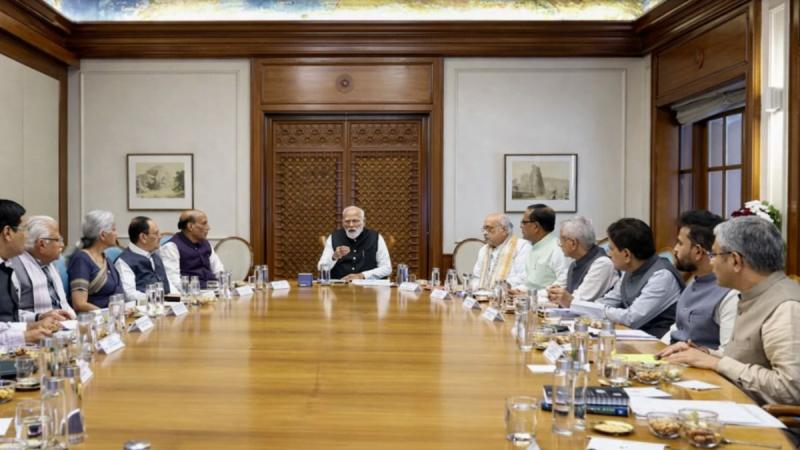
 New Delhi: Amid ongoing tensions in West Asia (Middle East) and its impact on the global economy, Prime Minister Narendra Modi on Saturday held a crucial and high-level meeting of the Prime Minister’s Economic Advisory Council (EAC-PM). This meeting not only closely assessed the country’s current economic situation, but also discussed in detail how to address future crises and India’s long-term development strategy (LRD).
This important meeting comes just a day after the Finance Ministry and the Reserve Bank of India (RBI) announced several major measures to attract foreign investment and support the steadily weakening rupee. The Indian rupee has depreciated by nearly 6 percent against the dollar since January 2026, raising concerns among the government and policymakers. During the meeting, Council members presented the Prime Minister with a comprehensive account of the impact of the West Asia crisis on India and the global market.
After the meeting concluded, PM Narendra Modi shared details of the discussion on the social media platform X (formerly Twitter). He stated that the meeting focused on critical issues such as India’s economic transformation, accelerating reforms, and strengthening the country’s ease of living and ease of doing business. This meeting is also in the news because opposition leader Rahul Gandhi recently expressed fears of an economic tsunami in the country due to the West Asian crisis. Although the Indian economy achieved an impressive growth rate of 7.8 percent in the fourth quarter of the financial year 2025-26, many leading economists believe that the pace may slow down in the future due to the global crisis. The RBI itself has reduced its GDP growth forecast for the financial year 2026-27 from 6.9 percent to 6.6 percent.
The Economic Advisory Council to the Prime Minister (EAC-PM) is a completely independent body whose primary function is to provide expert advice directly to the Prime Minister on economic and related policy matters. This council provides timely and important recommendations to the government in shaping the country’s economic direction. Currently, this special council is headed by S. Mahendra Dev. Renowned experts Sanjay Kumar Mishra, Sanjeev Sanyal, and Shamika Ravi serve as full-time members.