
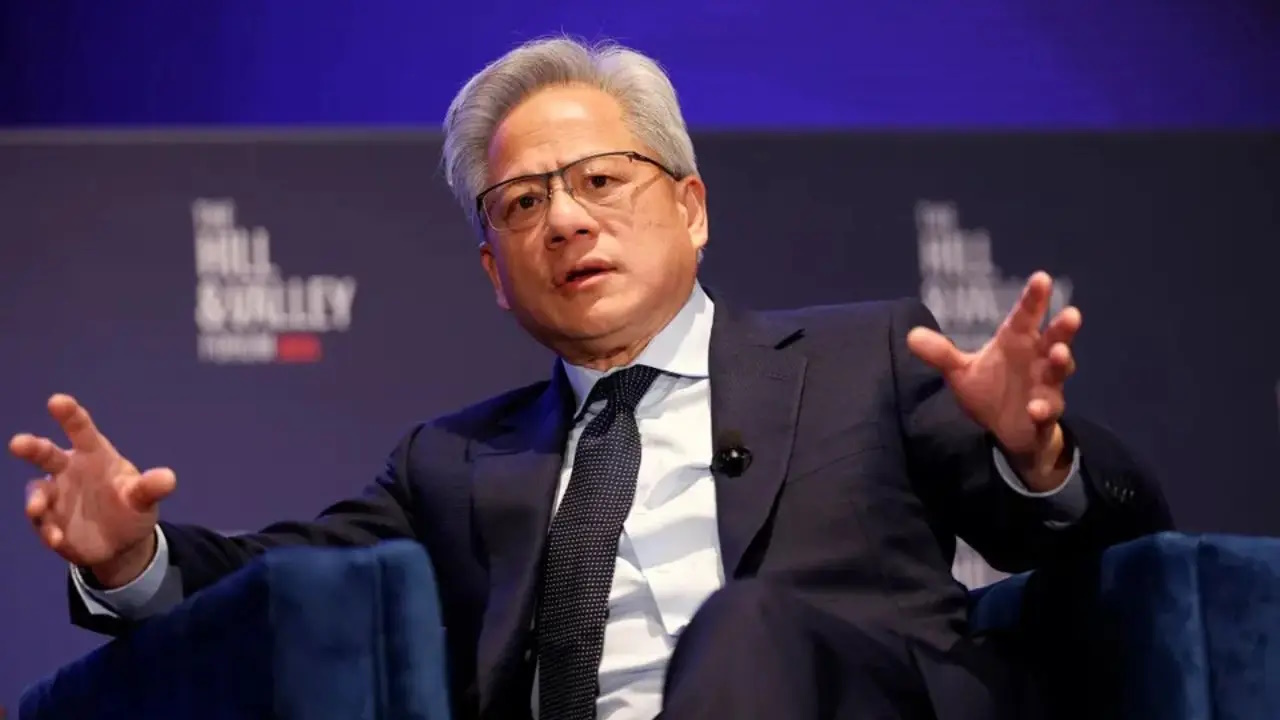
Washington: China has strongly denied allegations that Chinese intelligence agencies trapped NVIDIA CEO Jenson Huang in a honey trap. Beijing stated that the allegations are entirely baseless and constitute a malicious campaign aimed at undermining China's international image, according to reports. The new controversy has emerged amid heightened technological competition and trade restrictions between the U.S. and China, centering on a leading figure in the global chip industry. Chinese Foreign Ministry spokesman Guo Jiakun denied the allegations at a media briefing. China’s stance is that claims about Chinese intelligence agencies planning to extract information linked to NVIDIA’s top management have no foundation. Beijing accuses those spreading unsubstantiated allegations of attempting to harm China’s international credibility.
The response from China came shortly after reports surfaced that NVIDIA’s board of directors had initiated an independent investigation into the matter. Allegations concerning the senior leadership of NVIDIA, one of the world’s foremost AI chip manufacturers, have sparked significant discussions within the technology sector and U.S. national security circles. The allegations involve former executive Alice Huang of Singapore-based data center company MegaSpeed. Reports claim that Chinese intelligence agencies may have used Alice Huang to gather strategic information related to Jenson Huang and NVIDIA. U.S. investigative agencies reportedly have expressed suspicion about possible connections between these individuals and China’s Ministry of State Security.
MegaSpeed is known to be one of the major purchasers of NVIDIA’s artificial intelligence chips in large quantities. Consequently, the company’s commercial transactions, chip procurement, and supply chain operations have come under investigative scrutiny. Alongside, concerns have been raised about whether advanced AI processors subject to U.S. export controls were being transferred to China through third countries, including Singapore. Another key question raised in reports is whether companies like MegaSpeed served as intermediaries to circumvent U.S. export restrictions and facilitate chip trade to China.
The U.S. has imposed controls on exporting advanced chips vital for AI technology development, aiming to prevent technologies usable for military applications and sophisticated surveillance systems from reaching China. Proven violations of such export restrictions could lead to severe legal and national security consequences.
Amid the controversy, allegations concerning Jenson Huang’s personal life have also emerged. According to reports, Huang acknowledged in a message said to have been sent to NVIDIA employees that he had been unfaithful to his wife. He reportedly apologized for the difficulties his actions caused his family and colleagues. Meanwhile, NVIDIA’s board has stated that there is currently no evidence that Huang endangered U.S. national security or compromised the company’s confidential technologies. They emphasize that an independent investigation is ongoing and caution against drawing conclusions before it concludes.
NVIDIA is a key global supplier of powerful processors essential for data centers and AI model training. The company’s chips are a critical factor in the technological competition between the U.S. and China. As the U.S. seeks to restrict the export of advanced chips to China, Beijing is taking steps to develop its own semiconductor industry. In this context, any security-related controversy involving NVIDIA’s top leadership carries significant implications for the dialogue between the two countries.
n
Original Malayalam report: Malayalam Daily News