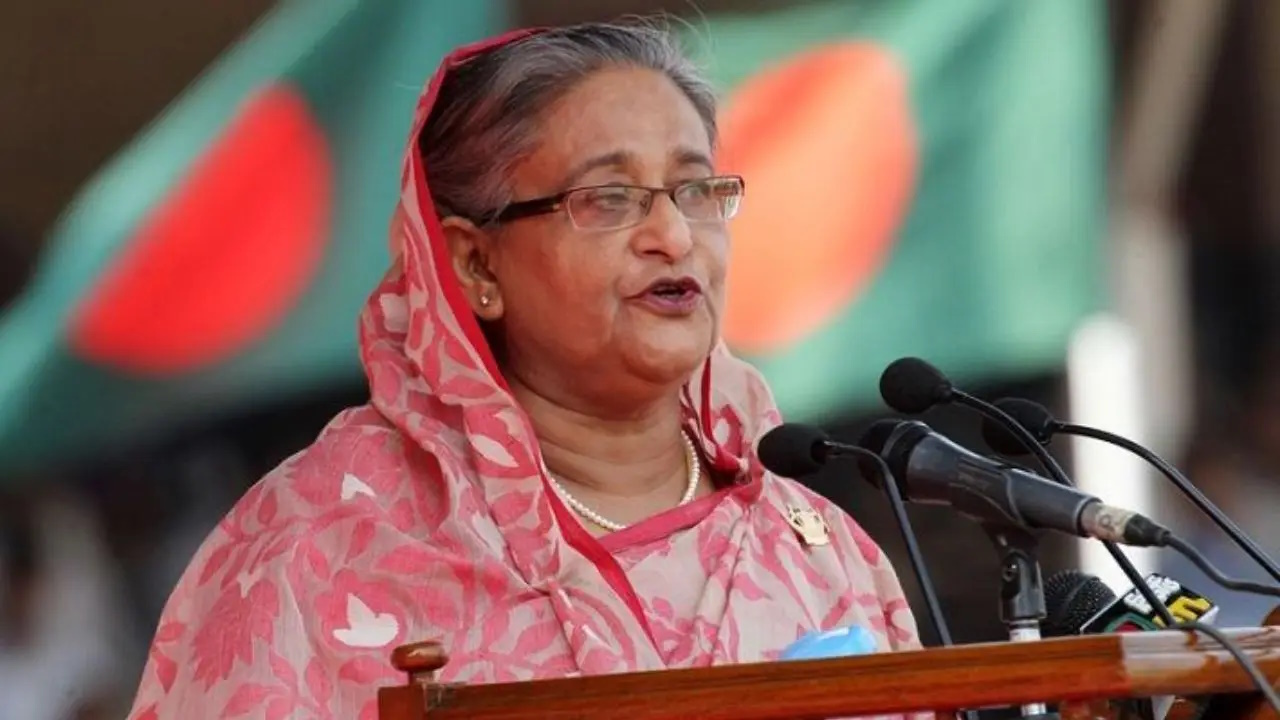
Dhaka: Reports that former Prime Minister Sheikh Hasina, who was ousted from power in Bangladesh, is preparing to end her asylum in India and return to her home country are fueling new political controversies. The Bangladeshi caretaker government, which has strongly rejected news regarding Hasina’s return, alleges that her moves are not genuine efforts to go back home but rather strategies with political objectives.
Speaking to the media in Dhaka on Monday, Mohammed Aminul Islam, Chief Prosecutor of the International Crimes Tribunal, sharply criticized Hasina’s actions. He stated that Sheikh Hasina has no real interest or intention of returning to Bangladesh. Islam accused that the news circulating about her return is part of attempts to create confusion in the political atmosphere. Evaluating Hasina’s recent activities and statements, the prosecution’s assessment is that no serious effort is underway to return to Bangladesh through legal procedures.
The student protests that shook Bangladesh in August 2024, followed by widespread popular dissent, brought an end to Sheikh Hasina’s long tenure. As the protests intensified, Hasina resigned from the prime ministerial position and left the country for India. Since then, Hasina’s political future in India and her return to Bangladesh have remained a key diplomatic issue between the two countries.
Amid these developments, reports emerged that Hasina applied for a new passport and national identity card to legally return to Bangladesh, sparking intense political discussions in Dhaka. As prospects of Hasina’s return were actively debated, the government issued a strong response, with the prosecutor denying any truth to the reports on her passport application and labeling them as political propaganda.
Authorities maintain that Hasina is not undertaking the legal actions required for someone intending to return. There is no basis for the narratives that she will soon come back to Bangladesh, according to the officials. Reports had previously suggested that Sheikh Hasina indicated a desire to return to Bangladesh in December, which revived discussions about her return. However, considering the current legal and political circumstances, experts estimate that her return will not be so straightforward.
Hasina faces legal actions for crimes against humanity related to violent incidents during the anti-government protests of 2024. Reports say she was sentenced to death in absentia by a special tribunal. The allegations stem from serious charges connected to the suppression of protesters. However, Sheikh Hasina denies all the accusations, contending that the trial was politically motivated and the judicial proceedings lacked impartiality. She has questioned the legality of the sentence and the fairness of the trial.
Consequently, the case has transcended domestic political disputes to become an internationally watched legal issue. Bangladeshi authorities have declared that Sheikh Hasina will not be granted a new passport or other travel documents. Reports indicate that Foreign Affairs Deputy Minister Humayun Kabir took a harsh stance, describing Hasina as a fugitive terrorist and dictator and ruling out the possibility of issuing her new travel documents. Kabir stated that no government entity will provide Hasina with citizenship-related documents or travel permits.
Nonetheless, withholding a passport and legally revoking citizenship are distinct actions. Thus, the government representatives’ strong political rhetoric cannot be taken as proof that Hasina’s citizenship has been officially revoked.
Bangladesh’s government has formally requested India to extradite Sheikh Hasina, citing the cases and court proceedings against her. The Indian Ministry of External Affairs has confirmed receipt of the extradition request. However, India is proceeding by considering existing legal and diplomatic procedures without issuing an immediate decision. Crucial factors include the extradition treaty between the two countries, relevant legal provisions, the nature of the cases, and prevailing political conditions.
Whether India will accept Bangladesh's demand to extradite Hasina remains the central question. Since the fall of the Awami League government in August 2024, significant shifts have occurred in diplomatic relations between India and Bangladesh. Hasina’s continued stay in India and Dhaka’s extradition demand have become critical points of contention.
Every move concerning Hasina’s future amid the new political context in Bangladesh is being closely monitored. The Bangladeshi stance calls for her return to face legal proceedings. At the same time, India’s decision on extradition will influence future bilateral relations.
The prosecutor’s allegation that press reports on Hasina’s return are mere political tactics, combined with the government’s refusal to issue travel documents, further complicate the situation. Whether Dhaka can bring the former prime minister from India or if the legal and diplomatic disputes will protract remains to be seen.
As uncertainty continues over Sheikh Hasina’s political comeback, India’s stance on her extradition and further developments in Bangladesh’s legal processes will be pivotal in South Asian politics.
n
Original Malayalam report: Malayalam Daily News