
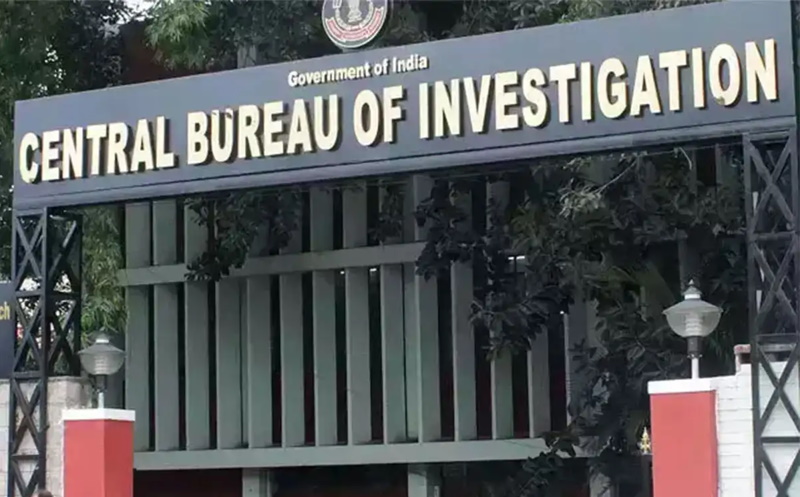
Ghaziabad: To effectively investigate the increasing international crimes such as corruption, financial frauds, black money laundering, benami property acquisitions, and illegal financial dealings through cryptocurrency, India has provided specialized training to law enforcement and investigative officers from foreign countries. The Central Bureau of Investigation (CBI) organized a one-week special training program for 24 investigative officers from 16 countries.
The primary objective of this program was to enhance the proficiency of investigators in areas including collecting evidence in complex corruption-related cases, tracing sources of illicit financial transactions, identifying assets acquired through criminal activities, and uncovering cross-border money laundering chains. In view of the shift from traditional methods of economic crimes to more technical ones, digital forensic examinations, financial data analysis, monitoring of cryptocurrency transactions, and international legal assistance systems have become highly significant in the investigative domain.
This specialized training menu, which introduces investigators from various countries to India’s investigative experience and technical expertise, was organized under the Indian Technical and Economic Cooperation (ITEC) program of the Ministry of External Affairs. The training began on November 4 and concluded on November 10 at the CBI Academy in Ghaziabad, Uttar Pradesh. The closing ceremony was chaired by CBI Special Director N. Venugopal on November 10.
A total of 24 officers—comprising 11 women and 13 men—participated, aiming to improve cooperation between investigative agencies of different countries, share best practices in corruption investigations, and enhance crime detection capabilities using technology. Given that corruption and financial crimes often involve multiple countries, information exchange and coordination among investigative agencies are critical. Such international training initiatives are evaluated as instrumental in strengthening cooperative frameworks for cross-border crime investigation.
Given the rising importance of digital evidence in contemporary economic crimes, the program emphasized scientific methods of collecting and examining such evidence. Officers were provided detailed explanations on how information from computers, mobile phones, electronic records, and digital financial transactions could be utilized for investigations. The training included ensuring the authenticity of digital evidence, the secure storage and exchange of evidence, and analyzing it in a manner admissible in courts.
Besides direct financial transactions, electronic communications and digital records often serve as vital evidence in corruption cases, underscoring the need for investigators to be proficient in technical examinations. New investigative challenges arise from some digital transactions outside conventional banking systems, especially when using cryptocurrency to transfer money and attempting to conceal its origin through various digital wallets and transaction systems.
The program also emphasized investigative methods to detect the pathways of funds acquired through criminal activity, which are transferred across multiple accounts and institutions to hide their true source. The concealment of illicit money through investments in land, buildings, commercial establishments, shares, and other financial assets poses considerable challenges to investigative agencies. Methods such as purchasing property in others’ names to obscure actual ownership, forming companies that exist only on paper, and moving money through multiple entities are commonly scrutinized in financial crime investigations.
Training sessions covered investigative approaches to identify such benami transactions and networks of shell companies. Alongside investigating suspicious financial dealings, discussions also focused on the importance of measures such as identifying the ultimate beneficiaries of assets, analyzing corporate ownership structures, and examining linkages among various financial documents.
In addition to identifying perpetrators and ensuring penalties in corruption cases, recovering assets gained through crimes is crucial. The program incorporated various legal aspects related to discovering, freezing, attaching, and legally reclaiming financial assets. It elaborated on civil and criminal proceedings involved in asset confiscation, effective presentation of evidences in courts, and challenges in establishing ownership of crime-acquired assets.
Situations where money earned through crime in one country is invested in another necessitate legal assistance and information exchange between investigative agencies. The importance of international cooperation in such scenarios was highlighted during the training.
As part of the program, foreign officers visited the CBI headquarters in New Delhi, gaining insights into the operations and technical frameworks of India’s premier investigative agency. The visit introduced participants to the functioning of the CBI’s Network for Evidence Tracing, Research and Analysis (N-EtRa) laboratory and the Global Operations Centre.
The exposure helped officers understand the role of modern technological systems in analyzing digital evidence, utilizing technical information, and coordinating investigative intelligence. The visit also underscored the critical role of such systems in enhancing investigative capacities amid rising technology-driven crimes.
Participants hailed from Botswana, Lebanon, Mali, Mauritius, Nigeria, Tanzania, Zimbabwe, Ethiopia, Ghana, Iraq, Madagascar, Maldives, Myanmar, Namibia, Panama, and Paraguay—reflecting the program’s international stature with participation from countries across Africa, Asia, and the Americas.
Officers representing countries with varied legal systems and investigative methodologies trained together, providing a platform to exchange experiences and discuss investigative challenges. The program also included visits to historically and culturally significant sites in Delhi, fostering better understanding of India’s heritage and strengthening bonds and mutual understanding among participants.
Given that corruption and financial crimes extend beyond national borders, strengthening international investigative cooperation has become imperative. When illegally acquired funds are shifted to foreign bank accounts, companies, or digital assets, investigation by a single country’s agency alone may be insufficient. Coordination, information exchange, and technical collaboration among law enforcement agencies worldwide are vital for effective investigation.
In this context, the international training program led by the CBI not only enhances the professional capabilities of investigating officers but also opens new avenues for inter-country cooperation. The program exemplifies India’s ongoing efforts under the Indian Technical and Economic Cooperation initiative to share technical expertise and operational experience with other countries.
Organized with the objective of making corruption investigations more scientific, technology-driven, and international, this training marks a significant step towards strengthening links among investigative agencies in the global fight against financial crimes.
n
Original Malayalam report: Malayalam Daily News