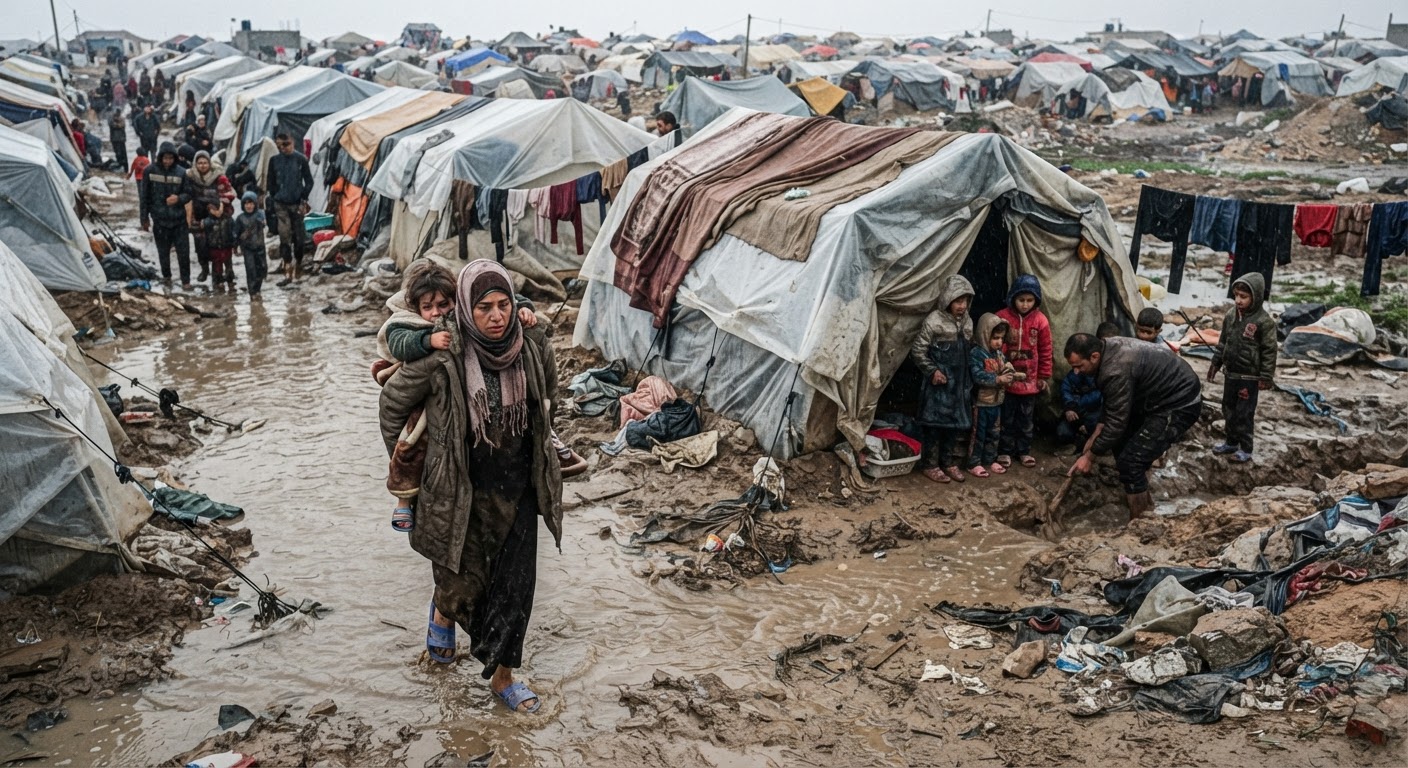
Gaza: Heavy rains, extreme cold, and flooding are exacerbating the hardships faced by the residents of Gaza. Tens of thousands of Palestinians who lost their homes and basic infrastructure due to the war and are currently residing in temporary shelters are confronting a severe crisis. Alongside the adverse weather, the spread of respiratory infections and disruptions in health service operations are further aggravating the situation.
According to reports from the United Nations and international humanitarian organizations, as of November 14, approximately 2.26 lakh (226,000) people across about 46,000 families have been affected by the harsh weather conditions. More than 40,000 temporary shelters reportedly sustained damage or became unusable due to the rains and flooding. Families without safe housing—especially children, the elderly, and pregnant women—are in acute distress.
Meanwhile, the World Health Organization (WHO) has expressed concern over the rise in respiratory diseases in Gaza. Compared to the same period last year, there have been 33,000 additional acute respiratory infections reported. Dr. Reinhold van de Veer, a WHO representative, stated that about 11 percent of all current medical consultations are related to respiratory infections. Medical experts have warned that stagnant rainwater and the dampness in shelters create favorable conditions for the growth of mold and bacteria. Lack of protection from the cold, as well as insufficient access to clean water and sanitation facilities, increase the risk of disease spread.
Hospitals in Gaza continue to face a critical shortage of treatment facilities. According to the Ministry of Health, only 90 hospital beds are currently operational for child healthcare in Gaza and northern Gaza, compared to 350 beds available before the escalation of conflict. Shortages of medicines, medical equipment, electricity, and fuel are severely affecting hospital operations.
Meanwhile, on November 14, the European Union urged Israel to allow the uninterrupted delivery of humanitarian aid to Gaza and to open border crossing points for relief supplies. The EU also condemned an Israeli airstrike reported on November 12 near Nasser Hospital in Khan Yunis, which allegedly killed six people, including a surgeon, and injured at least 27 others.
A coalition of 53 countries and international organizations, led by Britain, Qatar, and Jordan, has called for the urgent delivery of medical equipment, fuel, food, and materials necessary for temporary shelters to Gaza. Relief organizations have warned that stocks of essential items such as tents, blankets, and waterproof tarpaulin sheets are nearly depleted.
It is estimated that around one million displaced people are living in flood-threatened areas, including about 400,000 residing in extremely high-risk zones. As rains intensify, flooding of temporary shelters and the spread of polluted water pose serious health threats. The dysfunction of sewage treatment systems and shortages of laboratory equipment and diagnostic supplies present challenges to controlling infectious diseases.
Additionally, the lack of machinery needed to remove debris from destroyed buildings and to repair roads and water distribution systems adds to the crisis. Reports from UNICEF, Islamic Relief, and Save the Children indicate that restrictions on the availability of fuel, heavy machinery, and spare parts are major obstacles to restoring essential services.
International humanitarian organizations warn that if emergency aid is not increased, safe shelters are not arranged, and health services are not restored while the cold season intensifies, the humanitarian disaster in Gaza will worsen significantly.
n
Original Malayalam report: Malayalam Daily News