
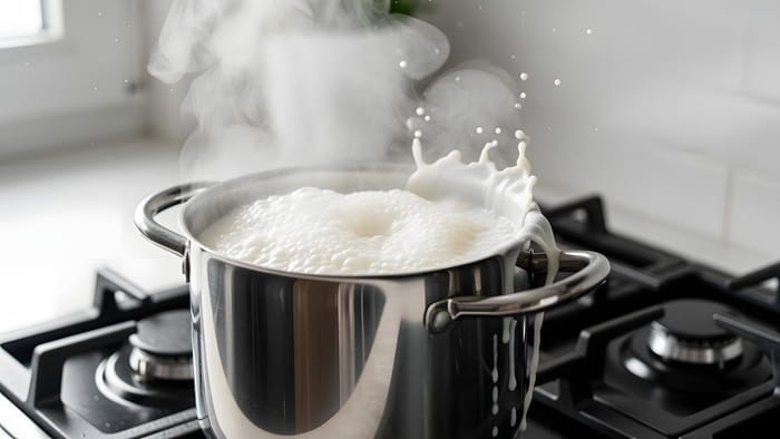
 As soon as the scorching summer heat sets in, the fear of food spoiling quickly creeps in. If food isn’t properly stored, it can rot within hours. Milk is one such sensitive commodity, subject to chemical changes and curdling quickly due to rising temperatures. Sometimes, fresh milk brought in the morning spoils before evening, or even curdles immediately upon placing it on the stove.
This wasted milk not only results in financial loss but also disrupts the entire household routine. Maintaining milk’s purity and freshness is crucial, especially in families with young children or the elderly. People often blame the milk’s quality or the milkman for spoiled milk, but the real culprit lies in our own small, everyday carelessness.
During the summer, bacteria in the air multiply rapidly. Therefore, not storing milk at the correct temperature, using dirty or contaminated containers, or boiling it repeatedly can all delay its shelf life. If you’re also tired of this problem, try the following simple and effective home remedies to keep your milk safe and fresh for a long time.
1. Use of dirty, unclean, or wet utensils
If the vessel used to boil milk is not perfectly clean, it will curdle immediately. Even the slightest trace of acidity, soap residue, or dirty water in the vessel can quickly spoil the milk’s nutrients. Bacteria are very active in the heat, so even a small amount of dirt can ruin the entire milk.
- What to do: Before boiling the milk, thoroughly wash the container with clean water and dry it. If possible, set aside a separate container for boiling the milk.
2. Leaving it out for hours after boiling
Often, after boiling milk on the stove, people leave it exposed for hours in the kitchen, hoping to let it cool. This mistake is particularly costly during the intense heat of May and June. Germs in milk begin to multiply rapidly as soon as it is exposed to a warm environment.
- What to do: Once the milk has boiled and reached room temperature, put it back in the refrigerator without delay. Don’t leave it out overnight or for several hours.
3. Keep boiling on the gas again and again
Many housewives have the habit of boiling milk three to four times a day to prevent it from spoiling. This practice does more harm than good. Repeatedly heating milk over high heat destroys essential nutrients and proteins, causing it to lose its thickness and curdle quickly.
- What to do: Boil milk only once or twice a day. Heat only the amount you need for tea, coffee, or other beverages. Separate the milk from the main pot and heat it.
4. Not paying attention to the refrigerator temperature and cooling
If your refrigerator isn’t at the right temperature or isn’t cooling properly, milk can curdle even after being stored inside. Another common mistake is placing milk containers or packets on the refrigerator’s door tray, where the temperature fluctuates due to frequent opening of the door.
- What to do: Always keep the refrigerator temperature at 4 degrees Celsius or below during the summer. Always store milk in the coldest part of the refrigerator, i.e., the inner main shelf toward the back.
5. Buying old or poor quality milk
Sometimes the problem isn’t with our handling, but with the milk we’re purchasing. Many dairies don’t maintain the milk in the proper cold chain, leaving it vulnerable to spoilage before it even reaches your doorstep.
- What to do: Always buy milk from a reputable brand or a trusted dairy. If you use packaged milk, be sure to check the “use by” or expiration date. If the milk notices even the slightest change in smell or sourness, consume it immediately.
Compiled by: Anusree