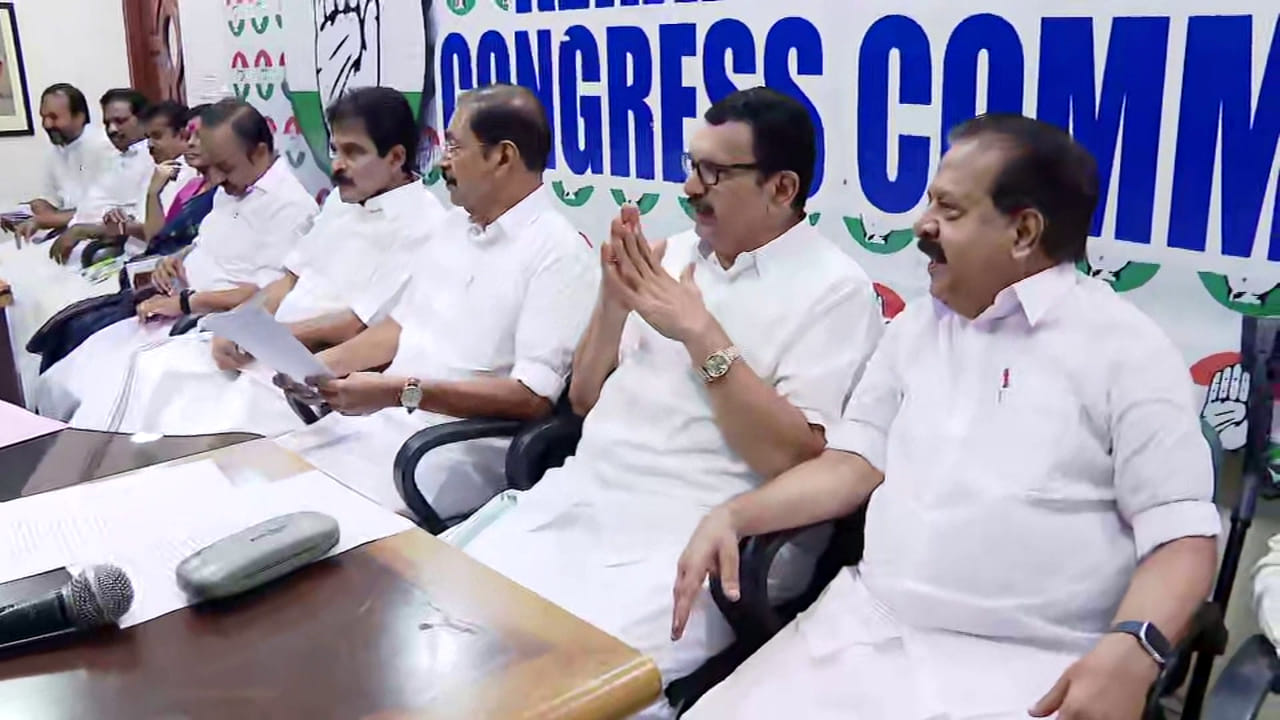
Thiruvananthapuram: As dissatisfaction within the state Congress towards its leadership became public, internal party divisions have intensified. In an online meeting of KPCC office bearers and District Congress Committee (DCC) presidents, severe criticism was directed at Chief Minister V.D. Satheesan and KPCC president Sunny Joseph. Leaders expressed strong discontent over the government's functioning style, the ongoing uncertainty in the allocation of board and corporation positions, the excessive consideration given to the component party Muslim League, and controversies related to the GNA power contract. They also faulted the government for failing to take actions aligned with the expectations of party workers even months after coming to power.
KPCC General Secretary Deepti Mary Varghese sharply criticized the controversies surrounding the GNA power contract, calling it a serious setback to the image of both the government and the Congress. She pointed out that the conflicting positions taken by the Chief Minister and the Electricity Minister on the contract are causing confusion among the public. Varghese questioned what party workers should communicate to the public when two senior leaders from the same government provide divergent explanations. She demanded that the Chief Minister and concerned minister clarify the official stance of the government and party on the matter.
The media wing leaders complained that not only the electricity contract dispute but also visible differences among the Chief Minister and other ministers on various issues are placing Congress spokespersons in a vulnerable position. They highlighted that the party leadership lacks clear information regarding government decisions and is unable to effectively respond to increasing media allegations. The urgent need to address communication gaps between the government and the party also emerged.
The persistent uncertainty in the allocation of board and corporation positions attracted the most criticism. Leaders Mohan Kumar and Sony Sebastian condemned the failure to take decisions on key board and corporation appointments despite the UDF government having completed six months in office. They noted that many important positions still continue to be held by appointees from the previous LDF administration. The leaders condemned the disconnect whereby even grassroots party workers lack awareness that a Congress-led government is in power.
Criticism was raised over the inadequate recognition and consideration given to longtime party workers who had supported the party during its years in opposition. The leadership was faulted for failing to extend organizational benefits to these workers despite attaining power. The delay in appointments was warned as detrimental to the morale and operational effectiveness of the party cadre.
DCC presidents also protested against the leadership, alleging a lack of fair district-level representation in the distribution of posts. They complained that many decisions are made without consultation with district leadership and that deserving party workers’ names are ignored. The leaders called attention to extraordinary delays in decision-making and demanded urgent intervention in administrative affairs. They raised concerns that the DCC leadership is not given prior information about ministers’ visits to their districts.
Complaints about poor coordination between government programs, development activities, and the party’s local units were voiced. The disconnect was said to adversely affect the organization, prompting calls for strengthening the relationship between ministers and district leadership.
The meeting intensified allegations that the Muslim League, as a component party, is given undue importance in government machinery and power positions. A section of leaders accused Chief Minister V.D. Satheesan of prioritizing the League’s demands at the expense of the needs of various Congress sections and workers. It was also claimed that positions due to Congress were reserved by some for their favorites when the League received its demanded posts. Criticism emerged that granting the Muslim League five ministerial berths and a cabinet rank was a politically erroneous decision.
Party office bearers reminded leadership not to overlook the fact that Congress has 63 MLAs in the Legislative Assembly. They accused the leadership of failing to protect the organizational interests of the Congress—the main front party—and called for greater clarity and justice in power sharing with component parties.
Meanwhile, the A group within Congress maintains a firm stance against further neglect in the distribution of board and corporation positions. They aim to strengthen demands for including group representatives in discussions on the allocation of posts. Leaders decided to reactivate group activities to maintain influence within the organization. They also adopted a position rejecting unilateral decisions by some leadership members.
In the midst of these internal conflicts, criticism was also directed at MP Rajmohan Unnithan for publicly airing the party’s internal disputes. Kasaragod DCC president P.K. Faisal urged the leadership to intervene to stop Unnithan’s public criticisms of AICC Organizing General Secretary K.C. Venugopal, KPCC president Sunny Joseph, and UDF convener Adoor Prakash. Faisal emphasized that repeated public criticism of senior leaders goes against organizational discipline. He warned that if Unnithan continues on the same path, he would be compelled to reveal several matters publicly. Reportedly, other leaders present at the meeting supported Faisal’s position.
The online meeting, convened to review organizational activities amid ongoing disputes over power-sharing within the state leadership, became a forum for airing grievances against both the government and party leadership. While the stated agenda was to discuss measures to energize organizational work and increase public outreach of government initiatives, leaders’ criticisms dominated the discussions.
The meeting also deliberated on organizing state-wide protests and agitations demanding the resignation of Chief Election Commissioner Ganesh Kumar. The increasing discord between the government and the party, dissatisfaction over power-sharing with component parties, internal group conflicts, and criticisms of the organizational leadership are now posing new challenges for the state Congress.
With uncertainty around the appointment of a new KPCC president persisting, the strong dissent expressed by office bearers and DCC presidents at the meeting is expected to intensify political activity inside the party in the coming days.
n
Original Malayalam report: Malayalam Daily News