 Hung ministries are rare in Kerala politics. Usually, one front gets a clear majority. But there are strong indications that this could change in the 2026 assembly elections. This time, it is likely to be a tough fight with uncertainty until the results are out.
The first indication of this change is seen in the local government election results. In the 2025 elections, the LDF and the UDF showed a balanced position, winning seven district panchayats each. Although the situation was similar in 2010, the political context today is different.
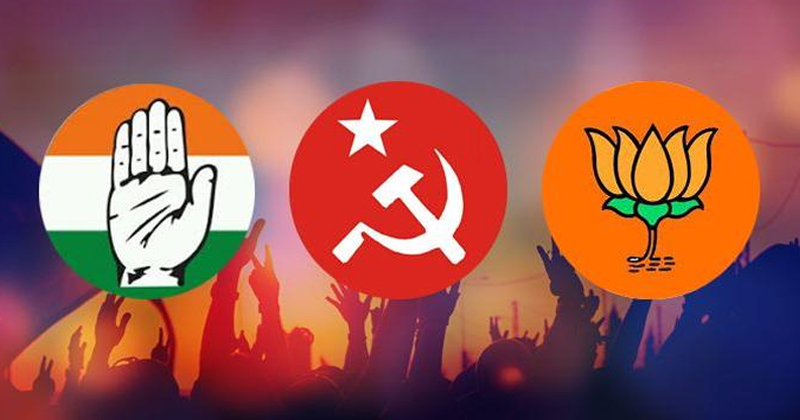
This balance was reflected in the 2011 assembly elections. The UDF came to power with a very narrow majority, winning 72 seats and the LDF 68 seats. But the contest then was mainly between two fronts. The main difference now is that the BJP is emerging as a third force.
The BJP, which had a small vote share earlier, has now become a force that can influence the outcome in many constituencies. Although it does not have a statewide dominance, it can win or split the votes in some constituencies. Even if it wins five or ten seats, it will significantly affect the LDF-UDF equation.
A strong triangular contest is expected in constituencies like Manjeswaram and Palakkad. A similar contest will be formed in Thiruvananthapuram, Vattiyoorkavu, Nemom, Kazhakoottam, Attingal, Thiruvalla and Thrissur. Even small differences in votes will be a determining factor in the outcome.
There is no strong wave in the state at the moment. Issues like Sabarimala, economic issues, corruption, and crime do not uniformly influence voters. Political trends have shifted to a more local level. With each constituency responding based on its own issues and circumstances, elections are becoming more unpredictable.
Although anti-incumbency sentiment persists, it is not translating into strong protests against individual MLAs everywhere. Many LDF leaders have personal support in their own constituencies. Therefore, the chances of large-scale losses are low.
Even if the LDF loses some of its 98 seats, it may remain strong. Meanwhile, it will not be easy for the UDF to get a clear majority either. It will be even more difficult to get 71 seats when the votes are divided into three parts.
In this situation, political parties have changed their strategies, giving more importance to constituency-level issues and the personal influence of candidates rather than state-level issues.
This is not a single-wave election. Rather, the 2026 election will be shaped by a combination of balance, vote splitting, and the rise of a third force. As the path to a clear majority becomes more complicated, the possibility of a hung cabinet looms large. The final result will be known on May 4.