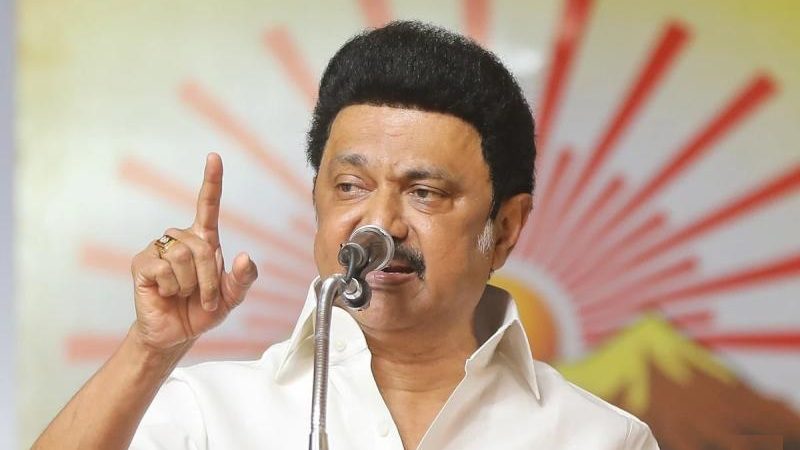
 Chennai/New Delhi. The South Indian state of Tamil Nadu is currently the center of intense political discussion in the country. The primary reason behind this political discussion is the newly formed “Vijay government,” which has been making rapid decisions since coming to power. Meanwhile, speculation is rife regarding the state’s former ruling party, the DMK, and its leader, M.K. Stalin. Political circles are increasingly speculating that the DMK may soon become a part of the central ruling National Democratic Alliance (NDA). However, neither the BJP nor the DMK has yet issued any official statement regarding these speculations.
This political debate has arisen at a time when the Narendra Modi government at the Centre is desperately needing a two-thirds majority in Parliament to pass several major constitutional and political proposals. In recent months, the central government failed to garner the support it had hoped for on the Constitutional Amendment Bills implementing reservations for women in Parliament and state assemblies, and on the new delimitation bill in the country, and the NDA fell just short of the required number in the Lok Sabha. Political analysts believe that the BJP is now trying to forge new alliances with regional parties in South India to facilitate the passage of major legislation in the Rajya Sabha and future national politics, and to weaken the opposition ‘INDIA’ alliance.
The results of the recently concluded Tamil Nadu Assembly elections have further fueled these speculations. The DMK, long a state power, suffered a major setback in this election, ousting the party from power. Following the electoral defeat, M.K. Stalin formed a committee to review shortcomings, and a renewed brainstorming has begun within the organization. Political experts say that amid this changed political climate, the BJP and DMK are now exploring the possibility of coming closer together, so that both parties can secure their future political interests.
Even though reports of a compromise are circulating in political circles, bringing the DMK on board is not considered easy for the NDA. The DMK has long been a staunch ideological opponent of the BJP, and Stalin has openly opposed the central government on the delimitation issue, alleging that the new rules would reduce the representation of southern states. Furthermore, the BJP’s longtime ally, the AIADMK, is already in the fray in Tamil Nadu. Consequently, the public stance of the two once bitter rivals (BJP and DMK) remains strongly opposed to each other, posing several major hurdles in the path of this potential alliance.