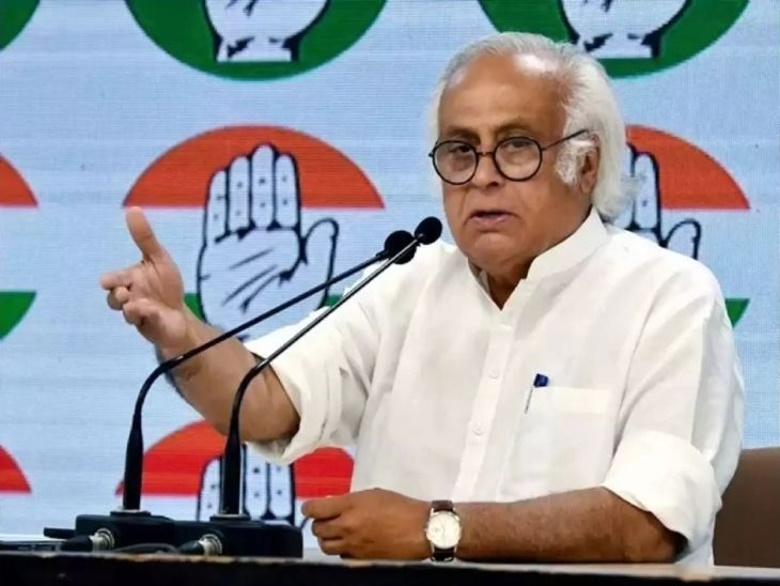
 New Delhi: Congress General Secretary (Communications) and Rajya Sabha MP Jairam Ramesh has raised concerns over the Election Commission of India’s Special Intensive Revision (SIR) of electoral rolls, claiming that millions of voters have either been removed from the rolls or asked to provide additional documents to retain their registration.
According to figures cited by Ramesh, around 78 million names were removed from electoral rolls during the first two phases of the SIR exercise. He said this amounted to roughly 13 percent of the electoral rolls covered by those phases.
Ramesh said the Election Commission launched the first phase of the SIR exercise in Bihar in June 2025, followed by a second phase covering nine states and three Union Territories in November 2025.
The third phase, according to him, began across 16 states and three Union Territories in mid-2026.
Citing figures available from 12 states and two Union Territories, Ramesh claimed that 61.8 million names had been excluded from electoral rolls containing 360.6 million registered voters — more than 17 percent of the total.
Ramesh further claimed that more than 54.3 million voters had received notices requiring them to submit supplementary documents to establish their eligibility and retain their names on the electoral rolls.
He argued that these cases represented another 15 percent of voters facing uncertainty over their electoral registration.
According to Ramesh, when voters whose names have already been excluded are combined with those facing additional verification, roughly 32 percent of the electorate covered by the exercise could be affected. He described this as equivalent to nearly one in every three voters.
Ramesh also released state-wise figures that he said reflected the proportion of voters affected by deletion or additional verification requirements.
According to the figures cited by him, the proportion stood at 53.73 percent in Delhi, 52.58 percent in Chandigarh, 48.90 percent in Telangana, 39.57 percent in Jharkhand, 37.50 percent in Haryana and 35.71 percent in Uttarakhand.
He placed the corresponding figures at 35.36 percent in Meghalaya, 33.88 percent in Maharashtra, 27.60 percent in Karnataka, 23.67 percent in Odisha, 21.17 percent in Andhra Pradesh and 15.23 percent in Punjab.
The Congress leader said lists of voters requiring further verification had been made public in states including Karnataka, Telangana and Jharkhand, enabling affected citizens to check their status and submit the required documents.
He said a similar list was released in Delhi on September 19, 2026, following demands for greater transparency. Ramesh alleged that comparable lists had not yet been made publicly available in several other states, including Punjab.
Ramesh also claimed that people from socially and economically disadvantaged sections were disproportionately represented among those excluded from electoral rolls.
He further alleged that in several large states, more women than men had been removed from the rolls.
Criticising the SIR process, Ramesh argued that requiring large numbers of citizens to submit additional documentation placed an unnecessary administrative burden on voters and could affect their ability to remain registered.
He called for greater transparency in the revision process and questioned why such a large number of voters remained subject to additional verification after extensive revisions of the electoral rolls.
The figures and allegations cited by Ramesh represent the Congress leader’s account of the SIR process and would need to be considered alongside official Election Commission data and responses.