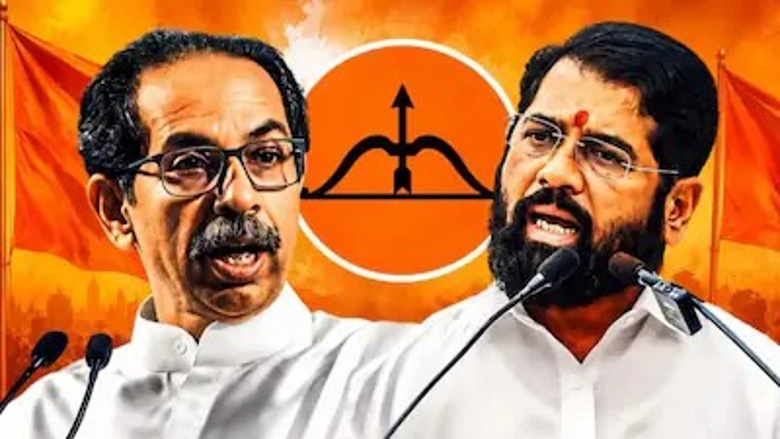
 Mumbai: These days, the national political scene is experiencing a wave of rebellions and political upheavals. Following the turmoil within the Aam Aadmi Party’s Rajya Sabha camp, the rebellious stance of AIADMK MPs after the Tamil Nadu elections, and the rift within the Trinamool Congress in West Bengal, Maharashtra’s political landscape has been shaken. The Uddhav Thackeray-led Shiv Sena (UBT) in Maharashtra has suffered another major split in four years. Six of the party’s nine Lok Sabha MPs confirmed their defection in a joint press conference with Chief Minister Eknath Shinde. This entire defection campaign, dubbed “Operation Tiger,” has raised political heat from Mumbai to Delhi. The Uddhav Thackeray faction has termed it a deliberate conspiracy by the Bharatiya Janata Party.
“Operation Tiger” is the name of an alleged campaign launched by the Shiv Sena, led by Eknath Shinde, to bring public representatives from the Uddhav Thackeray faction to its side. The primary reason behind this designation is that the tiger has always been the traditional symbol of the undivided Shiv Sena, created by the late Balasaheb Thackeray. The Shinde faction’s aim is to weaken the Uddhav camp and establish complete control over Balasaheb’s true political legacy. Rumors of this campaign began to surface as early as April, when Shinde faction leaders claimed that several MPs were in contact with them. These rumors were proven true when several MPs were absent from important meetings convened by Uddhav Thackeray in Mumbai and Aditya Thackeray’s birthday celebrations, and their phones went unreachable. Subsequent reports emerged that six MPs had secretly traveled to Delhi, exposing the plot of the defection.
Shiv Sena (UBT) leader Sanjay Raut reacted sharply to this major split, saying that those infiltrating the party are not tigers but wolves, and that his party will launch “Operation Wolf” in response. Raut alleged that MPs are being offered inducements of ₹50 crore to break away. To prevent the split, Anil Desai, the Uddhav faction’s chief whip, issued a whip, and Arvind Sawant wrote to Lok Sabha Speaker Om Birla, requesting him not to recognize the rebel faction. As far as the legal situation is concerned, under the Constitution’s Tenth Schedule (the anti-defection law), at least two-thirds of the original party’s legislative members must defect to avoid disqualification in the House. The defections of six of the Uddhav faction’s nine MPs in the Lok Sabha constitute a two-thirds threshold, which could avert the immediate threat to their parliamentary membership. However, for full legal protection, a similar defections among Assembly MLAs are considered necessary.
The ruling NDA government at the center appears to be directly benefiting from this nationwide political turmoil. Currently, the NDA has 293 MPs. If the potential 19-20 rebel Trinamool Congress MPs and the six Shiv Sena MPs support the NDA camp, this number could rise to 320. Furthermore, if 22 DMK MPs also support the government on issue-based issues due to differences between the DMK and Congress in Tamil Nadu, the NDA’s tally could reach 342. However, to pass crucial constitutional amendment bills such as women’s reservation and delimitation in the Lok Sabha, the government will need a two-thirds majority (approximately 360 MPs, according to the current strength of the House). Even with these rebellions and new equations, the NDA may fall short of the magic number, requiring it to rely on other regional parties.