 New Delhi: A heated war of words has erupted between the Indian government and the Office of the United Nations High Commissioner for Human Rights (OHCHR) over Saturday’s widespread protests and subsequent arrests in the national capital. India has strongly objected to the UN’s concerns regarding the mass detention of protesters, calling the remarks “completely unjustified interference” in the country’s internal affairs.
India has unequivocally stated that it is the world’s largest and most vibrant democracy, where the Constitution guarantees citizens the rights to peaceful assembly and freedom of expression. Furthermore, the country has a strong institutional framework, a fully independent judiciary, and an impartial media capable of protecting the fundamental rights of its citizens.
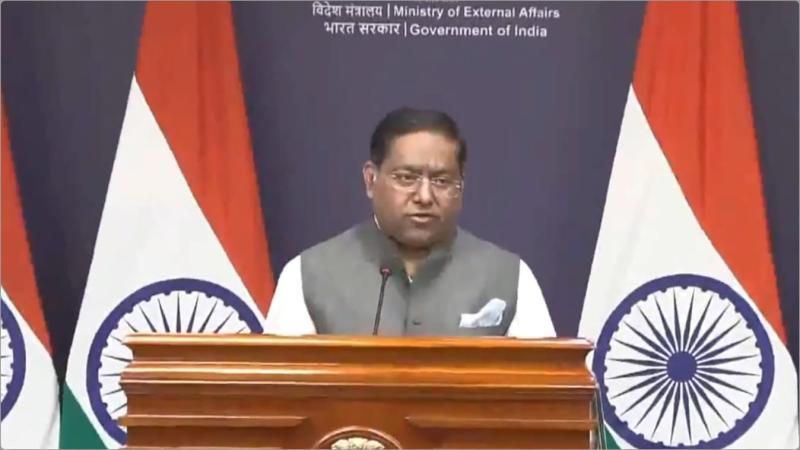
India’s official response was issued through its official account, “India at UN,” on the social media platform X. New Delhi strongly urged the UN Human Rights Office to maintain neutrality and impartiality, stating that it should pay equal attention to large-scale protests and human rights violations occurring in other parts of the world.
The United Nations Human Rights Office expressed concern over reports of the detention of protesters, prominent leaders of the movement, members of civil society organisations, lawyers, and journalists during the large-scale demonstrations in Delhi. In response, India clarified that while the right to peaceful protest is constitutionally protected, the exercise of this right in a democratic system is subject to reasonable legal restrictions designed to maintain public order and security.
According to India, the country’s law enforcement agencies operate in full accordance with legal provisions, and independent courts are available to address citizens’ grievances. In its statement, New Delhi reiterated that the OHCHR’s comments were based on misconceptions and constituted unnecessary interference in India’s internal affairs. India urged the UN to adopt a non-selective approach and impartially assess protests taking place elsewhere in the world.
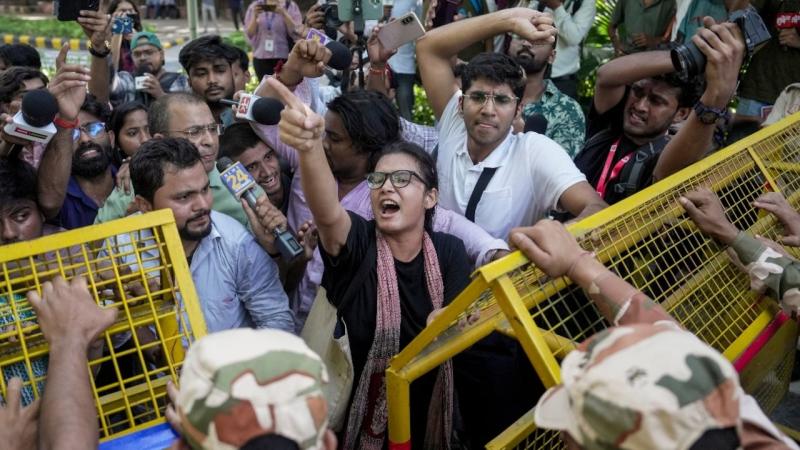
The controversy erupted during a protest in Delhi demanding the resignation of Chief Election Commissioner (CEC) Gyanesh Kumar. According to reports, Delhi Police detained approximately 3,000 people, including protesters, supporters of political organisations, and several opposition leaders, as part of measures to maintain law and order. The protesters had planned to gather at Jantar Mantar and stage a sit-in demonstration.
However, Delhi Police had already rejected the application seeking permission to hold the demonstration at Jantar Mantar. Despite this, strict security measures and transportation restrictions were imposed across the capital to prevent protesters from gathering. Restrictions were reportedly imposed on metro, bus, and rail services, as well as internet access, to prevent protesters from entering Delhi.
Cockroach Janata Party (CJP) founder Abhijit Dipke and two of his associates, Sourav Das and Ashutosh Ranka, arrived in Delhi from Mumbai on Saturday morning and were detained at the airport shortly after their flight landed. However, most of those detained were later released following preliminary police procedures and precautionary measures.
Meanwhile, UN Human Rights Office spokesperson Thameen Al-Kheetan issued a statement on Saturday reiterating his concerns over the mass arrests carried out before and during the large-scale protests in Delhi. He called on Indian authorities to ensure full respect for the rights to peaceful assembly and freedom of expression.
The UN also stated that any restrictions on peaceful protests must meet strict criteria of “necessity” and “proportionality.” Al-Kheetan urged law enforcement agencies to exercise restraint when dealing with protesters and encouraged the authorities to engage in meaningful dialogue to resolve the issues surrounding the demonstrations.