The private life and interpersonal relationships within the Nehru-Gandhi family, one of Indian politics' most influential dynasties, have long been topics of public curiosity. The disagreements and conflicts within this family, which has played a decisive role in the nation's political history, have often surfaced in political discourse. The narratives from the autobiography "Belonging: A Journey of Love," attributed to former Congress president Sonia Gandhi, have once again brought old family tensions into public discussion.
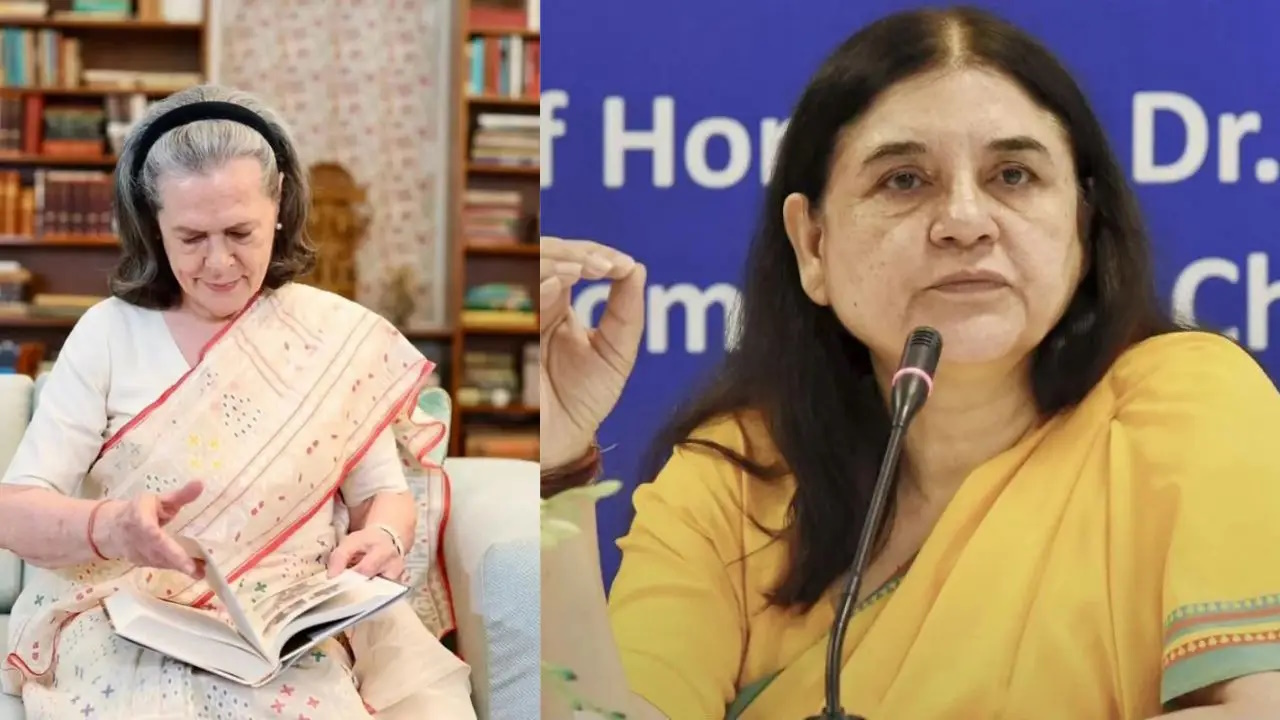
A central theme in these accounts is how the relationship between Rajiv Gandhi's wife, Sonia Gandhi, and Sanjay Gandhi's wife, Maneka Gandhi, gradually weakened. Though initially friendly as members joined by marriage into the same family, their differing personalities and changing family circumstances eventually created distance in their relationship, according to the descriptions attributed to Sonia.
Maneka's arrival into Indira Gandhi's family, her romantic involvement with Sanjay Gandhi, Indira's concerns about their marriage, power dynamics within the family, and the political conditions during the Emergency period constitute the backdrop to these events.
Maneka and Sanjay Gandhi first met at the wedding engagement of a school friend of Sanjay's towards the end of 1973. At that time, Maneka was a student at Lady Shri Ram College in Delhi. The daughter of a military officer, Maneka balanced her studies with active involvement in modeling. Maneka, about ten years younger than Sanjay, attracted his attention with her personality and demeanor. Shortly after meeting, the two grew close, and within days Sanjay informed his family of his desire to marry Maneka.
However, this decision surprised his mother, Indira Gandhi. Though Sanjay had previously introduced female friends to the family, this was the first time he seriously spoke about marriage so soon. Indira advised her son not to rush but to better understand each other before making a decision, believing caution prudent.
Sonia's account indicates that Indira Gandhi harbored reservations about Sanjay's marriage proposal, chiefly due to the significant age difference. She worried that Maneka, significantly younger than Sanjay, might struggle to adjust to the responsibilities of married life. Moreover, Maneka was not yet 18, the legal age for marriage, posing a delay for the wedding.
Meanwhile, interventions by Maneka’s mother, Amteshwar Anand, reportedly unsettled Indira. It was said that Maneka's mother pressured Sanjay to set a wedding date quickly. Indira even reportedly consulted one of Sanjay’s close friends to verify the accuracy of this information. Despite these apprehensions, Sanjay remained firm in his intention to marry Maneka. Eventually, with family consent, the engagement proceeded. In September 1974, Sanjay Gandhi and Maneka Anand were wed, marking Maneka’s entry into one of India’s most prominent political families.
Sonia’s account suggests that Maneka’s early days in the Gandhi family were joyful. She depicts Maneka as an enthusiastic, open, and talkative young woman who enjoyed spending time with family members and listening to stories, including those told by Sonia herself. Rajiv and Sonia’s daughter, Priyanka Gandhi, is described as visiting Maneka’s room to hear such stories. Initially, there were no major disagreements between Sonia and Maneka, and as two daughters-in-law in the same family, they had opportunities to foster acquaintance.
However, this amicable atmosphere did not endure. Minor domestic frictions gradually escalated into serious differences, as portrayed by Sonia. Notably, names used within the family for the two women are highlighted: Sonia was referred to as “Bahu Rani” (senior daughter-in-law) and Maneka as “Chhoti Bahu Rani” (junior daughter-in-law). These titles followed the Hindi family tradition of distinguishing elder and younger daughters-in-law, linked to Rajiv being the elder brother and Sanjay the younger.
Sonia suggests that Maneka may have disliked the nickname "Chhoti Bahu Rani." Sonia emphasizes that both received equal regard in the family and were viewed more like daughters than merely daughters-in-law. Nevertheless, the difference in titles may have fostered feelings of secondary status in Maneka. Sonia also notes instances where Maneka spoke harshly to her. In such moments, Sonia claims she sought to avoid unnecessary family conflicts. Often, despite unease caused by some of Maneka’s remarks, Sonia maintained silence, but was not hesitant to assert her position when matters became intolerable.
Sonia’s perspective is that such relatively minor incidents cumulatively widened the gap between them. Conflicts emerged not only between Sonia and Maneka but also within the marriage of Sanjay and Maneka. Their differing temperaments became more apparent as the initial enthusiasm of their marriage waned. Sonia's account mentions that Sanjay and Maneka sometimes engaged in heated arguments in the presence of other family members, including occasions where Maneka spoke angrily and used harsh words even in front of Indira Gandhi.
However, Sonia’s approach is not to fully blame Maneka for these tensions. Considering Maneka’s youth and social interests, Sonia opines it would have been challenging for her to conform to the restrictive lifestyle characteristic of the Gandhi household. Each family member had distinct responsibilities and busy schedules: Indira Gandhi was deeply immersed in governing the country as Prime Minister; Sanjay Gandhi focused on his vehicle manufacturing project and later political activities; Rajiv Gandhi worked as a pilot; and Sonia herself devoted considerable time to family life and caretaking of Rahul and Priyanka.
Given these circumstances, Sonia assesses that Maneka may not have received sufficient companionship and attention within the family. Maneka, active in social events and friendships, may have found the disciplined and controlled family environment dull. With all members occupied by their duties, Maneka likely experienced isolation, which could have influenced her behavior. This suggests that family conflicts stemmed not only from personal differences but also from situational and lifestyle factors.
In June 1975, the declaration of Emergency in India dramatically altered the political landscape. The period under Indira Gandhi’s central government witnessed harsh criticism, curtailments of civil liberties, arrests of opposition leaders, and media censorship. During this time, although Sanjay Gandhi held no official office, he emerged as a significant influence on political decisions and government functioning. His assertive style drew dissatisfaction among senior Congress leaders, who accused him of making decisions without proper consultation. This political assertiveness sometimes concerned Indira Gandhi, according to Sonia’s account.
At this juncture, Maneka’s increasing political engagement is noted as a source of unease within the family. Sonia observes that Maneka did not attempt to moderate Sanjay's hardline stances or encourage him to be more reflective. Instead, she alleges, Maneka supported and actively participated in his political activities, which bolstered Sanjay’s political confidence but introduced new tensions within the family.
Maneka’s growing political ambitions led to questions about whether she would espouse more independent political views in the future. A reportedly significant remark by Indira Gandhi concerning Maneka’s political interests is recorded: she likened Maneka's ambitions to having “already sprouted wings,” an expression said to have been conveyed to senior official P.N. Dhar, who was Indira Gandhi’s Principal Secretary during the Emergency.
Further, Maneka began accompanying Sanjay at political events, and their interest in public work expanded. To establish her political identity, Maneka initiated the magazine "Surya," where she served as editor and her mother played a leading role. The magazine addressed political and contemporary issues.
Thus, Maneka's activities extended beyond family privacy into public political spheres. Key subsequent developments deepening the gap between Sonia and Maneka include the tragic death of Sanjay Gandhi in a plane crash on June 23, 1980. This event deeply shocked Indira Gandhi and the family and raised questions about who would carry forward Sanjay’s political legacy.
Following Sanjay’s untimely death, Maneka’s political ambitions and family disagreements became more prominent. A crucial episode was Maneka’s departure from Indira Gandhi’s residence in 1982, which publicly symbolized the rift within the family. Thereafter, Maneka adopted an independent political path and gradually became a senior leader of the Bharatiya Janata Party (BJP). Meanwhile, after Rajiv Gandhi’s assassination, Sonia Gandhi rose to national prominence as the head of the Congress party.
Hence, two daughters-in-law once living under the same roof and known by respective titles "Bahu Rani" and "Chhoti Bahu Rani" evolved into representatives of divergent political ideologies in India.
There is no single explanation for the widening distance between Sonia and Maneka. Factors such as age difference, personality traits, perceived family status, restrictions of joint family life, Sanjay Gandhi’s political career, and Maneka’s personal political ambitions all influenced their relationship, as per these narratives. Sonia views some of Maneka’s behaviors as impacting the family atmosphere, yet the complete picture requires acknowledging Maneka’s own experiences and perspectives.
These family dynamics represent not merely private disagreements but align with the histories of two family branches diverging politically. The estrangement between Sonia and Maneka exemplifies how personal fissures can intertwine with political distances, marking a notable chapter in the Gandhi family history.
n
Original Malayalam report: Malayalam Daily News